

The Assembly of First Nations chiefs unanimously voted on Tuesday to request the withdrawal of a new pipeline agreement between Canada and Alberta. They also expressed their full support for First Nations on the British Columbia coast who strongly oppose the project. The chiefs are gathered in Ottawa for their annual December meeting, focusing on the federal-provincial memorandum of understanding for a bitumen pipeline to Asian markets.
The agreement includes revising the federal ban on oil tanker traffic in northern B.C. waters, but the AFN delegates passed an emergency resolution showing their backing for the moratorium. Chief Donald Edgars of Old Massett Village Council in Haida Gwaii stated, “A pipeline to B.C.’s coast is nothing but a pipe dream.”
The resolution calls on Canada, Alberta, and B.C. to acknowledge the climate emergency and adhere to the United Nations Declaration on the Rights of Indigenous Peoples. AFN National Chief Cindy Woodhouse Nepinak emphasized the importance of respecting First Nations rights in large national projects.
The AFN represents over 630 chiefs from across Canada who convene twice a year to establish policy priorities. However, Stephen Buffalo, president and CEO of the Indian Resource Council, criticized the resolution for being rushed and lacking adequate discussion, particularly affecting First Nations involved in oil and gas development.
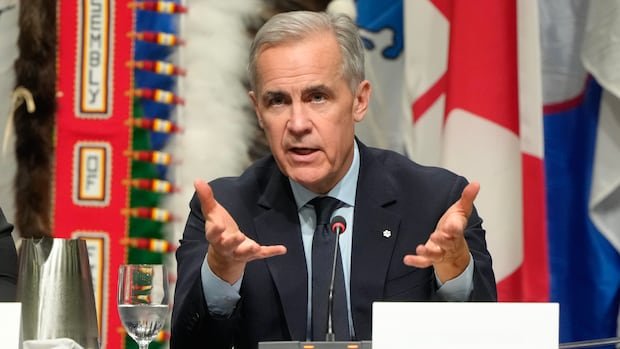
Prime Minister Mark Carney addressed the chiefs during the meeting and emphasized the necessity of partnership with Indigenous communities in major projects. He faced questions from chiefs on various issues, including clean drinking water and Indigenous rights. Carney assured that consultation must occur before designating a project in the national interest.
Carney announced plans for a joint first ministers’ meeting with First Nations and the introduction of clean drinking water legislation by spring 2026. The chiefs are set to engage with the major projects office and its Indigenous advisory committee, along with discussing numerous policy resolutions and emergency issues.