
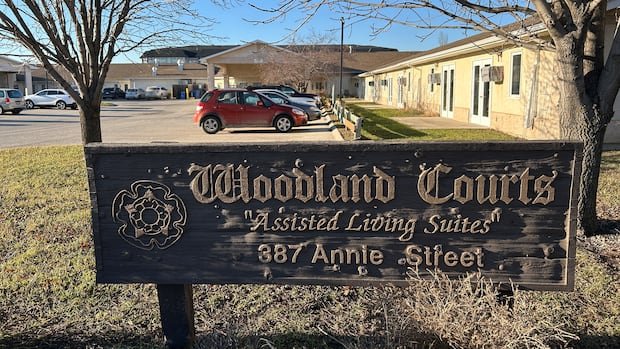

A supervisor at a retirement community and assisted-living establishment in Selkirk, Manitoba, expressed concern and apprehension concerning the residents of the buildings following a series of thefts reportedly perpetrated by a home-care aide from the health sector.
Christina Stark, the manager of the Woodland Courts assisted-living facility and Cambridge House retirement home, disclosed that a number of residents from the interconnected structures had reported missing cash or belongings, such as wedding bands, over the past few months. She approximated that a total of around $1,000 had disappeared.
Stark conveyed her feelings by stating, “I’m frustrated. I’m anxious for my residents.” The initial instance of vanished money was reported by a resident’s family towards the end of July or early August, according to Stark. Upon reviewing security footage, staff noticed an unknown individual entering and exiting the premises. An access code is mandatory for entry into the facility.
Although the regular home-care personnel, who are contracted externally by the Interlake-Eastern Regional Health Authority, verified his association with them, it was unclear if this was an internal familial matter at that point, as highlighted by Stark.
Approximately a month ago, relatives of another resident approached Stark on two separate occasions last month, alleging the disappearance of money. Stark initiated her own investigation by placing money as bait.
On November 10, Stark was provided with photographic evidence by a family member demonstrating the repeated entries of a home-care aide into a resident’s unit numerous times daily between November 6 and November 10, including visits at 2:30 a.m. and 3:30 a.m. while the resident would have been asleep.
The family had set up a motion sensor that captured images at the resident’s doorway due to him being a wandering risk, Stark explained. They questioned the frequency of his visits, especially during odd hours, which Stark found suspicious.
Upon reviewing security footage, it was observed that the individual entered and exited the building, visiting suites while residents were absent for activities like lunch or bingo. Stark mentioned that several residents had reported seeing a person with a flashlight in their room, but the connection was not made since the alleged worker was part of the home-care team.
However, Stark pointed out that the individual was not scheduled to work during the five-day period when he was seen entering and exiting a resident’s unit earlier this month. Additionally, the home-care team typically concludes work by 10 p.m., she noted.
Confronting the worker with the incriminating images in a boardroom meeting, Stark asked for an explanation regarding his presence in the rooms at late hours, to which he remained unresponsive. Subsequently, she asked him to leave and contacted the authorities.
The Royal Canadian Mounted Police (RCMP) acknowledged receiving a report about the thefts at the Annie Street assisted living facility on November 11, with two additional theft reports filed since then. No arrests have been made, and the police are actively investigating the incidents.
While there is no concrete evidence linking the home-care worker to the alleged thefts, Stark expressed a strong intuition in that direction. She emphasized that despite lacking direct evidence of theft, the individual’s actions appeared suspicious based on the surveillance footage obtained.
The Interlake-Eastern Regional Health Authority declined to comment on the employment status of the concerned employee when approached by CBC News, citing confidentiality in human resources matters. They emphasized their zero-tolerance policy towards criminal activities and assured that appropriate measures would be taken promptly.
Laura Tamblyn Watts, the CEO of the national seniors’ advocacy group CanAge, condemned exploiting vulnerable individuals in assisted living environments as a severe form of abuse. She stressed the importance of enhancing security measures and background checks for staff to safeguard residents effectively.
Following the incidents, Stark disclosed that security codes for both Woodland Courts and Cambridge House had been changed, and additional surveillance cameras had been ordered to enhance security measures. She asserted the commitment to preventing such incidents in the future and ensuring the safety of the residents.
Tamblyn Watts recommended that older adults in such facilities should have secure storage options like safes or lockboxes for their valuables within their living quarters. She encouraged the adoption of supportive technologies to enhance safety and well-being in communal living environments.
The organization is determined to prevent any reoccurrence of such incidents and has taken steps to bolster security measures. The residents’ well-being and safety remain a top priority for the management in their efforts to maintain a secure and harmonious living environment.
[End of rewritten article]