
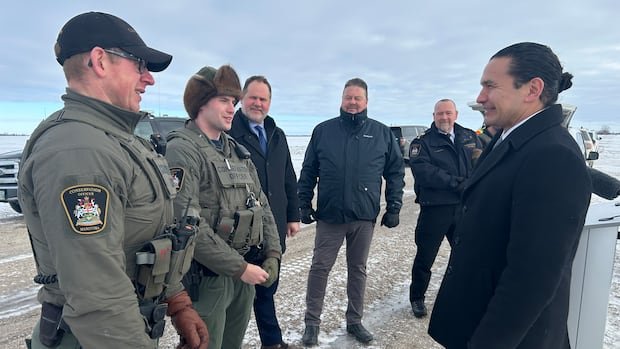

Eleven months have passed since Manitoba deployed conservation officers to monitor the United States border following concerns raised by U.S. President Donald Trump about potential illegal activities from Canada. However, there have been no significant incidents reported during this period, according to Manitoba’s natural resources minister, Ian Bushie. The Manitoba Government and General Employees Union, representing the conservation officers, also confirmed the absence of any notable incidents.
A freedom of information request revealed that there were no records of conservation officers aiding in drug seizures, migrant interceptions, or arrests. The decision to relocate 11 conservation officers closer to the border was part of a security initiative in response to Trump’s threats of imposing tariffs on Canadian and Mexican goods. The move aimed to address Trump’s allegations of insufficient border control efforts by Canada and Mexico, particularly concerning illegal crossings and drug trafficking.
The increased surveillance near the border involved conservation officers informing law enforcement and border officials of any suspicious activities. Premier Wab Kinew emphasized that the additional personnel could also assist in humanitarian efforts, especially in aiding migrants facing harsh weather conditions. The security plan, which included additional resources for law enforcement and an estimated cost of $1.4 million, was part of a broader strategy to enhance border protection.
Political analysts highlighted the symbolic significance of such measures in demonstrating proactive steps to combat illegal activities and potentially influence U.S. tariff decisions. Despite the absence of conservation officers in recent border operations, authorities continue to intercept drugs and detain individuals suspected of illegal border crossings. Statistics indicate low numbers of foreign nationals detained in Manitoba for illegal border entry, with similar trends observed in neighboring U.S. border patrol districts.
While some officials believe the heightened surveillance may have deterred border crossing attempts, concerns have been raised about the diversion of conservation officers from their regular duties. The union representing the officers expressed apprehension about the impact on wildlife conservation efforts and law enforcement activities due to the border-focused assignments.
In conclusion, the deployment of conservation officers near the U.S. border in Manitoba has been part of a strategic response to security concerns, although the actual impact on illegal activities remains limited. The initiative reflects ongoing efforts to bolster border protection and address cross-border security challenges effectively.