
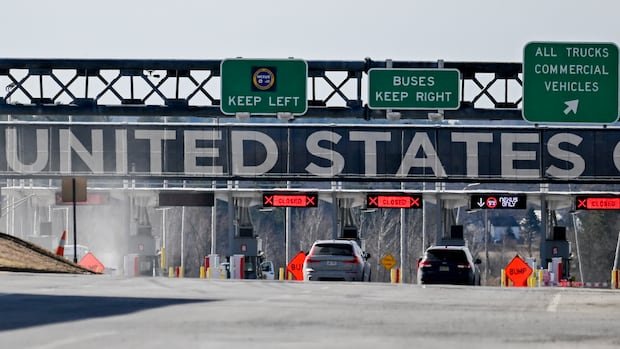

The federal government has issued updated travel guidance for First Nations individuals traveling to the United States, advising them to carry a passport along with their status card when crossing the border. Previously, First Nations people were allowed entry into the U.S. for various purposes without the need for a passport. However, new guidelines have been introduced, stating that crossing the Canada-U.S. border with a Secure Certificate of Indian Status (secure status card) may be possible, but it is ultimately up to the discretion of U.S. officials.
The government emphasizes the importance of having a valid passport and a machine-readable secure status card when using a status card to cross the border. Since February 2019, all newly issued or renewed secure status cards come with a machine-readable feature. The recommendation to carry a passport when traveling outside of Canada has been reinforced by Indigenous Services Canada.
Individuals registered under the Indian Act entering the U.S. for living or working purposes may be required to provide documentation verifying their percentage of Indian blood as per U.S. law. The Assembly of First Nations has cautioned against border crossings into the U.S., citing immigration enforcement actions and detentions of Indigenous individuals by U.S. Immigration and Customs Enforcement (ICE).
Concerns have arisen regarding the confiscation or damage of status cards in the U.S., prompting Indigenous Services Canada to offer emergency status card replacements and expedited requests for affected individuals. Various First Nations communities, including Mississauga First Nation, have advised against border crossings due to recent ICE detentions of Indigenous people. The Jay Treaty Alliance recommends that First Nations individuals carry specific documents when crossing into the U.S., while U.S. tribal members are encouraged to have their tribal IDs, state-issued IDs, driver’s licenses, or a U.S. passport on hand.