

U.S. President Donald Trump criticized allies on Tuesday for not providing more support to the U.S. war efforts against Iran. In a social media rant, he urged them to secure their own oil and emphasized that America should not be responsible for safeguarding the Strait of Hormuz.
Trump mentioned that the military offensive could conclude within two to three weeks, stating that the future of the strait’s security should be managed by nations dependent on it. He emphasized that this task should not fall on the U.S. but on countries like France.
The White House announced that Trump would address the nation in a prime-time speech on Wednesday to provide an update on the ongoing war.
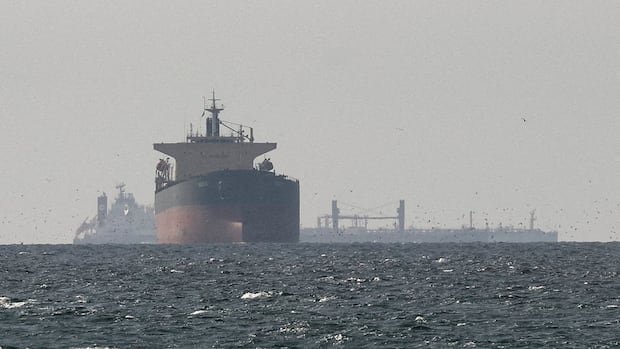
Earlier, the U.S. conducted a strike on Isfahan in Iran, resulting in a massive fireball. In response, Tehran targeted a Kuwaiti oil tanker in the Persian Gulf, underscoring the escalating conflict between the two sides.
The attacks highlighted the severity of the conflict, with both the U.S. and Israel intensifying their actions. Trump, despite claiming diplomatic progress, shared footage of the Isfahan attack, showcasing the fiery explosions.
The closure of the Strait of Hormuz by Iran following attacks by the U.S. and Israel has led to a spike in global oil prices. The impact was seen as U.S. gas prices surged past $4 per gallon on Tuesday for the first time since 2022.
Defense Secretary Pete Hegseth emphasized that the strait is an international waterway and not solely a U.S. concern. He echoed Trump’s sentiment that other nations, not the U.S., should play a more significant role in securing the vital shipping route.
In separate developments, Iranian Foreign Minister Abbas Araghchi clarified that Iran’s operations target U.S. forces only. Despite this claim, civilian targets were hit, including a Kuwaiti oil tanker struck by an Iranian drone in Dubai waters.
The situation remains tense, with ongoing military actions and escalating tensions in the region. Various Gulf and Israeli officials have expressed the desire for significant changes in Iranian leadership or behavior before considering an end to the military operations.
As the conflict continues, the U.S. and its allies are closely monitoring the evolving situation to determine the best course of action.