
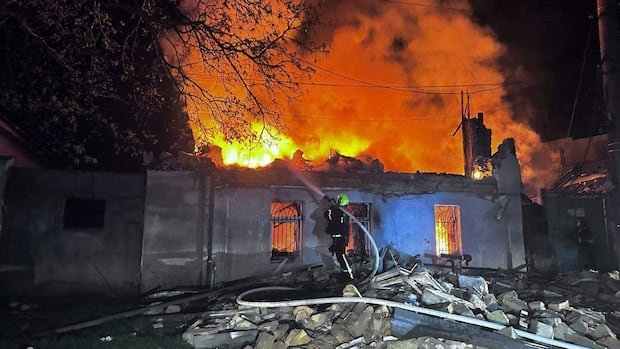

Following a declared ceasefire by the Kremlin for Orthodox Easter, it was reported that Russia continued to target Ukrainian positions using drones, raising doubts about the effectiveness of the truce, as per a Ukrainian military official. Despite a halt in artillery fire in the region where the 148th Separate Artillery Brigade operates, Russian forces persisted in using drones to attack Ukrainian positions. Ukrainian troops responded in kind, maintaining a stance of “silence to silence and fire to fire.”
Russian President Vladimir Putin announced a 32-hour ceasefire for the Orthodox Easter weekend, instructing Russian forces to cease hostilities from 4 p.m. local time on Saturday until the end of Sunday. Ukrainian President Volodymyr Zelenskyy pledged to honor the ceasefire, viewing it as an opportunity to advance peace efforts while warning of swift military retaliation for any breaches.
In the lead-up to the ceasefire, Russian drone strikes claimed the lives of at least two individuals in Odesa, Ukraine, with additional casualties reported. The Ukrainian air force stated that overnight, Russia targeted Ukraine with 160 drones, of which 133 were successfully intercepted or shot down. The Russian Defence Ministry reported that 99 Ukrainian drones were downed across Russia and occupied Crimea during the same period.
A prisoner exchange took place on Saturday, with Russia repatriating 175 soldiers. Zelenskyy confirmed the exchange, noting the return of both military personnel and civilians, many of whom had been detained since 2022. The exchange was marked by emotional scenes as families awaited the return of their loved ones, expressing hope for a lasting ceasefire and peace in the region.
Despite periodic prisoner swaps being a rare positive outcome of ongoing negotiations between Moscow and Kyiv, efforts to resolve the conflict have stalled over key issues. The talks, brokered by the United States, have yet to yield progress towards ending Russia’s prolonged invasion of Ukraine.
In a separate development, seven residents of Russia’s Kursk region returned from Ukraine after being captured by the Ukrainian army. Welcomed at the Belarusian-Ukrainian border by Russia’s human rights ombudsperson, the returnees marked the conclusion of individuals taken from the Kursk region following Ukrainian incursions in 2024. The unexpected Ukrainian infiltration into Kursk in 2024 represented a significant military success and a symbolic setback for the Kremlin, as it was the first time Russian territory had been occupied by a foreign power since World War II.