
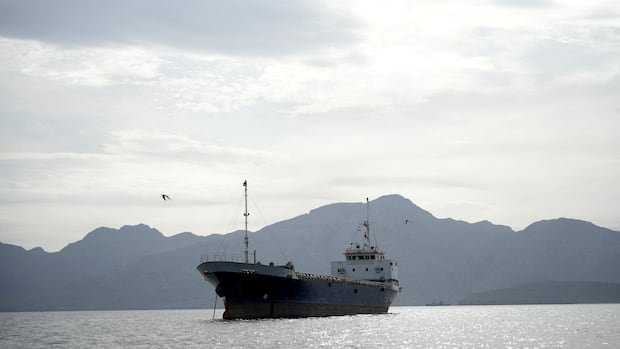

The United States military has implemented a blockade in the Gulf of Oman and the Arabian Sea, a move that experts believe could lead to heightened tensions during an ongoing two-week ceasefire. U.S. Central Command has announced that all vessels traveling to and from Iran will be monitored and potentially intercepted, irrespective of their country of origin. Non-Iranian vessels can still pass through the Strait of Hormuz, but those linked to Iranian trade may face being stopped, searched, or turned back.
President Donald Trump’s initial threat to completely close the Strait of Hormuz has not materialized. He stated that the blockade aims to compel Tehran to return to negotiations following a breakdown in peace talks over the weekend. The U.S. is targeting Iran’s oil exports, which generate an estimated $200 million daily, while Tehran has been charging transit fees to vessels passing through the strait, favoring ships from friendly nations and obstructing those from the U.S., Israel, and their allies.
Retired Royal Canadian Navy vice-admiral Mark Norman describes the blockade as a drastic measure, emphasizing the financial motivations behind it. Carleton University professor David Carment expresses uncertainty about the long-term strategy behind the blockade and questions whether the U.S. has a clear plan moving forward. He suggests that the U.S. may be focused on constraining China, the largest oil importer through the strait, rather than solely targeting Iran.
In terms of intercepting ships, the U.S. military will need to deploy various resources such as surface vessels, helicopters, and long-range patrol aircraft outside the gulf to enforce the blockade. Norman highlights the challenge of intercepting vessels and mentions the possibility of boarding and seizing ships, particularly those flagged as Chinese. He notes that the blockade itself and vessel seizures are considered acts of war under international maritime law, signifying a significant escalation.
While the effectiveness of the blockade remains uncertain, proponents believe it could pressure Iran back to the negotiating table. However, critics caution that the blockade could lead to further violence and a potential escalation of the conflict. With the two-week ceasefire set to end on April 22, the situation remains precarious.