
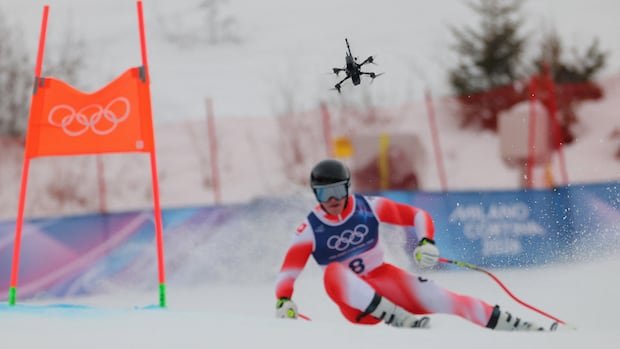

At the freeski slopestyle event, Canadian athlete Megan Oldham secured an Olympic bronze medal with an impressive final run, accompanied by a drone capturing the action from a unique angle. The use of first-person view (FPV) drones by the Olympic Broadcasting Services has garnered attention from viewers across various Olympic events, offering a dynamic and immersive viewing experience.
Pierre Ducrey, the International Olympic Committee sports director, emphasized the commitment to enhancing the viewing experience for audiences, whether inside the stadium or watching remotely. These advanced FPV drones can closely follow athletes at high speeds, matching their movements on the slopes, jumps, or ice surfaces, providing viewers with a thrilling perspective.
While drones have been utilized in the Olympics since 2014, the introduction of FPV drones represents a significant technological advancement. Operated by skilled pilots using specialized equipment, these drones have been praised for their ability to navigate challenging terrains and track fast-paced sporting actions, such as alpine skiing and luge competitions.
The drone operators, equipped with headsets and controllers, have been applauded for their precision and dedication in delivering captivating footage for viewers worldwide. Despite the technical challenges involved in deploying drones in varying Olympic settings, the teams responsible for drone coverage have showcased remarkable expertise and innovation.
However, one criticism facing the use of drones is the noise they generate, which has been likened to the buzzing sound of vuvuzelas from the 2010 soccer World Cup. Athletes have also expressed mixed reactions to the drones, with some appreciating the unique perspectives they provide while others raise concerns about their proximity during performances.
Overall, the integration of drones into Olympic coverage has added a new dimension to the viewing experience, offering audiences a closer look at the athletes’ performances. While the novelty of drone technology may require some adjustment, the IOC believes that it enhances the overall presentation of the games and showcases the athletes’ skills in a compelling way.