
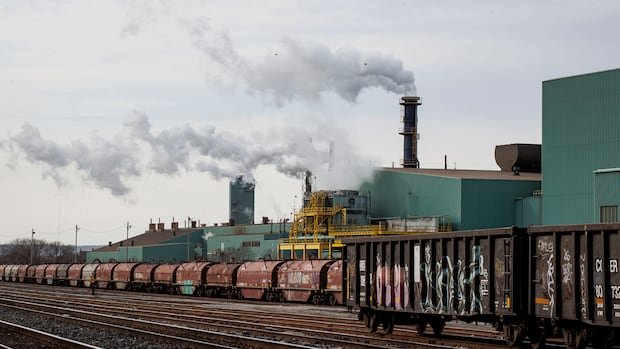

Amid U.S. President Donald Trump’s threat of imposing new 50% tariffs on various Canadian products, the president of a steelworkers union in Hamilton expressed concerns about the impact on the industry.
The head of United Steelworkers (USW) Local 1005, Ron Wells, mentioned that the existing tariffs have already negatively affected Canadian steel sales to the United States. He warned that further tariffs could lead to increased living costs and have a broader impact on businesses that rely on steel producers for supplies.
While 50% tariffs on steel have been in effect since last year, the exact implications of Trump’s recent announcement regarding the increase in tariffs for steel, automobiles, and auto parts starting January 1 remain unclear.
Hamilton, known for housing major steel producers like ArcelorMittal Dofasco and Stelco, along with numerous fabricators, is particularly vulnerable to these trade tensions.
Wells, representing around 620 Stelco workers, noted a significant slowdown in business activities since the tariffs were implemented.
Recent developments have seen the imposition of 50% U.S. tariffs on approximately $28 billion worth of Canadian goods, following failed trade negotiations between the two nations. Canadian Prime Minister Carney has pledged retaliatory tariffs against the U.S. beginning September 8.
Chamber CEO Highlights Business Struggles
Addressing the current situation, Hamilton Mayor Andrea Horwath emphasized the stress faced by Hamiltonians, especially in the steel and manufacturing sectors, amidst the prevailing uncertainty.
Greg Dunnett, CEO of the Hamilton Chamber of Commerce, echoed these sentiments, stating that Hamilton is among the hardest-hit communities and requires substantial support and investment to navigate through these challenges.
Expressing concerns over the impact of tariffs on operations, Cleveland-Cliffs, the owner of Stelco, did not provide a response to inquiries from CBC Hamilton before publication.
In a recent earnings call, Cleveland-Cliffs CEO Lourenco Goncalves expressed concerns about the competitive future of their operations in Hamilton without adequate measures to safeguard fair trade practices.
Stelco’s operations in Nanticoke, Ontario, also face uncertainties due to the ongoing trade tensions.
Similar to other sectors, the steel industry has been grappling with the evolving U.S. trade policies for over a year.
Addressing reporters, Carney highlighted the U.S.’s unfair negotiation tactics aiming to undermine vital Canadian industries like auto, steel, and aluminum.
<