
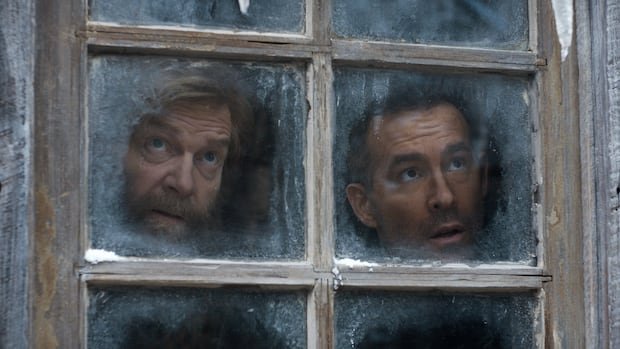

It is peculiar that we continually need reminders that other individuals are also human beings. This phenomenon can be viewed as a critique of humanity or a reflection of our current era. The core concept of the movie Mayday from the 1980s emphasizes an American veteran gradually realizing that a Soviet soldier possesses emotions and thoughts beyond malevolent intentions.
The narrative portrays the struggle to believe that former KGB agent Nikolai (played by Kenneth Branagh) genuinely wants to rescue U.S. navy pilot Troy (portrayed by Ryan Reynolds) after Troy crashes near Nikolai’s cabin in Soviet territory. Nikolai’s altruistic actions, such as protecting Troy amidst Cold War conflicts, initially appear foreign and unusual, given his Russian identity in 1987.
The storyline challenges the audience to accept Nikolai’s compassionate motives for safeguarding Troy, who symbolizes the nation he has grown to cherish. This dynamic is further complicated by Nikolai’s quest to reunite with and safeguard his estranged daughter, all while evading a rogue KGB agent and his group of ruthless pursuers.
The film subtly explores the notion that it may seem implausible for Nikolai to act out of genuine love for America rather than using a facade to undermine the country from within. The narrative unfolds to show an American character, Troy, learning that individuals from foreign lands can exhibit sincerity, complexity, and consciousness akin to his own.
Mayday and similar movies resonate because they challenge the implicit bias of dehumanizing those perceived as different and emphasizing the universal humanity shared by all individuals.
The movie excels as an action-packed buddy comedy, blending humor with stylish performances from both actors: Branagh as the charismatic ex-KGB agent and Reynolds as the earnest foil trying to navigate the chaos.
The directors, Jonathan Goldstein and John Francis Daley, skillfully balance humor and action, creating a film reminiscent of ’80s classics while infusing it with a modern twist. The cinematography captures the action sequences with long, fluid shots, contrasting the fast-paced editing prevalent in contemporary cinema.
While Mayday may appear simplistic on the surface, it effectively delves into Cold War-era tensions, portraying nuanced characters and questioning the traditional hero-villain dichotomy prevalent in mainstream Western media.
Overall, Mayday offers a thought-provoking exploration of humanity and propaganda, prompting viewers to reconsider long-held stereotypes and biases. It serves as a reminder that understanding and empathy transcend cultural and national boundaries, highlighting the common humanity shared by all.