

Parts of British Columbia are experiencing severe drought conditions this summer, leading to water use restrictions in areas like Bessette Creek and the Salmon River watershed. The low water levels are endangering salmon populations, prompting government intervention to protect the fish.
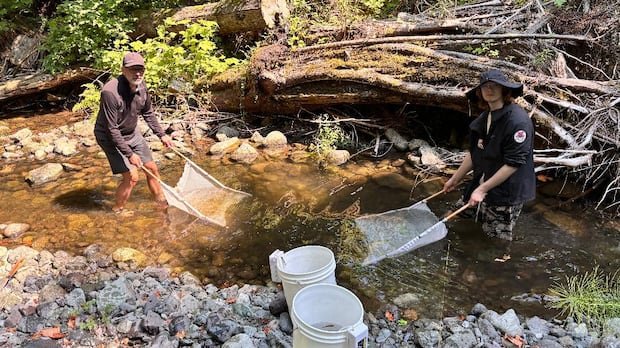
Bob Crandall, the treasurer of the Cowichan Lake Salmonid Enhancement Society, has been actively involved in rescuing fish from drying rivers for over 16 years. The society conducts fry salvage operations, manually relocating fish like salmon, trout, and char to areas with more water to ensure their survival.
The ongoing climate changes are making the rescue efforts more challenging, with streams drying up farther upstream than before. The process involves using aerators, bubblers, and nets to transport the fish safely. Despite the difficulties, Crandall remains committed to preserving the fish population and their ecosystem.
Collaborating with the Ts’uubaa-asatx Nation and volunteers, the society continues its efforts to relocate fish and monitor drying streams. The partnership with the Nation has been crucial in the success of the fry salvage operations, emphasizing the importance of preserving salmon as a keystone resource for the community.
However, similar rescue efforts in regions like France are facing limitations due to severe drought and extreme heat. The changing climate has led to unprecedented challenges, causing fish to suffer from physiological stress and increased mortality rates. Experts suggest focusing on ecosystem restoration and water management rather than relying solely on fish relocation as a long-term solution.
As climate change intensifies, it is becoming increasingly clear that sustainable solutions are needed to address the impact on fish populations and their habitats. Collaborative efforts between communities, organizations, and governments will be essential in mitigating the effects of drought and preserving aquatic ecosystems for future generations.