
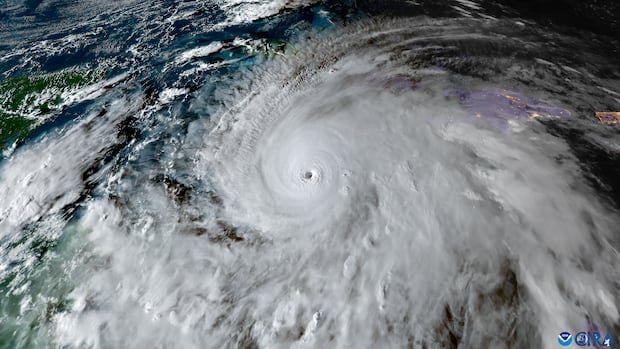

As of the current moment, the Atlantic hurricane season has seen only six named storms, most of which were short-lived. This raises questions about the lack of hurricane activity. According to Phil Klotzbach, a senior research scientist at Colorado State University, the primary reason for this unusual calmness is the powerful El Niño event currently underway.
El Niño, a component of the natural El Niño-Southern Oscillation (ENSO) cycle, affects the central Pacific Ocean water and atmospheric winds. When the ocean temperature rises 0.5 degrees Celsius above average, an El Niño event is identified. Conversely, a temperature decrease of 0.5 degrees Celsius indicates a La Niña event. The global impact of these oscillations is significant.
The ongoing El Niño event has led to an El Niño advisory, with predictions suggesting it could be a historically strong occurrence. Lindsey Long, a meteorologist at the U.S. National Oceanic and Atmospheric Administration (NOAA), mentioned the possibility of anomalies exceeding the historical record set in the winter of 1982-1983.
The Pacific Ocean is experiencing heightened hurricane activity due to El Niño, with 16 named storms recorded so far. However, the Atlantic basin nearly witnessed its first hurricane with Tropical Storm Fay reaching wind speeds close to hurricane levels. While El Niño is suppressing hurricane formation in the Atlantic, some short-lived tropical storms have impacted the Gulf of Mexico region.
The El Niño event is expected to peak in November or December, extending into 2027. Forecasters are uncertain about the implications for the next hurricane season, as historically, years following El Niño tend to have warmer Atlantic conditions but no El Niño events.