
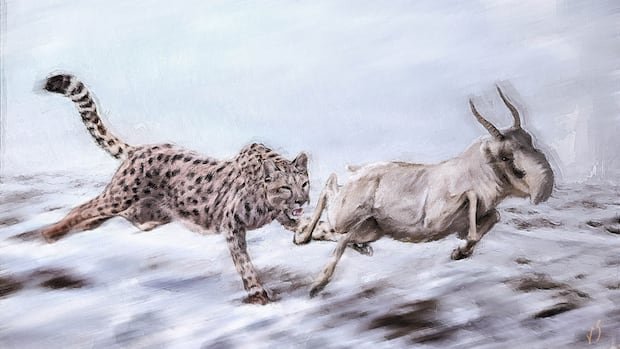

A discovery in the Bluefish Caves and a mine site in northern Yukon initially led experts to believe the bones belonged to an ice-age puma or cougar. However, DNA analysis conducted at the University of California revealed a different story. The testing was carried out by Molly Cassatt-Johnstone, a lab technician fresh out of her undergraduate studies, who was surprised by the results of her initial analyses on the Yukon bones, which did not resemble pumas.
Yukon paleontologist Grant Zazula recalls his astonishment upon receiving a message confirming that the creatures were not cougars but cheetahs. The identification of a Yukon Miracinonyx, also known as the extinct American cheetah, marked a significant breakthrough for Cassatt-Johnstone, who is now the lead author of a study published in Current Biology shedding new light on the ice-age cat’s diet and habitat.
Researchers previously believed that the American cheetah, resembling today’s cheetahs with their long limbs and slender build, would have evolved to hunt pronghorns on grassy plains. The unexpected discovery of these cheetahs in the Arctic tundra puzzled paleontologists. Beringia, the region where Asia and North America were once connected, posed a mystery as to how the Miracinonyx survived there without pronghorns.
To unravel this mystery, the study team, including researchers from Canada and the U.S., utilized stable isotope analysis to investigate the diet and lifestyle of the ancient cheetahs. The analysis of bone samples from the cheetah’s paw and leg suggested a diet predominantly consisting of fish, a behavior uncommon among past and present-day cats. This revelation has sparked further inquiry into the ecosystem dynamics that shaped the cheetahs’ dietary preferences.
The study’s findings challenged previous assumptions about the species’ behavior in different regions, highlighting the unique adaptations of Yukon cheetahs. The genetic analysis revealed that Miracinonyx was genetically closer to North American pumas than African cheetahs, with a low genetic diversity that may have impacted their adaptive potential and contributed to their eventual extinction.
Yukon paleontologist Grant Zazula advocates for renaming this distinct northern population from ‘American Cheetah’ to ‘Yukon Cheetah,’ emphasizing the significance of ongoing discoveries in paleontology. The study underscores the complexity of prehistoric ecosystems and the importance of each new bone find in unraveling the mysteries of the past.