
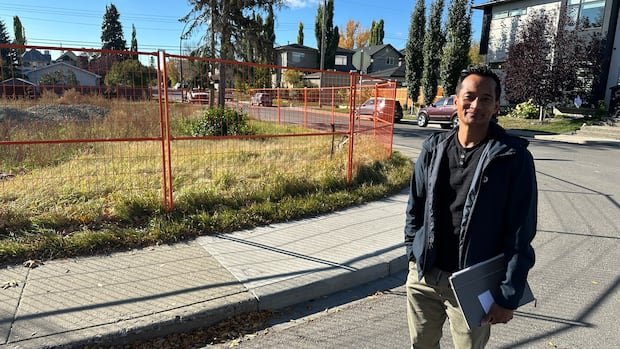

Sheldon Appave, a custom homebuilder, was taken aback by the $110,000 sidewalk replacement fee issued by the City of Calgary for his new four-unit row house project in Windsor Park. Appave expressed his frustration, stating that the hefty expense, which he believes is unjustified, accounts for about seven percent of the total building cost without providing any value in return.
The ongoing discussion surrounding zoning and density during the election campaign has sparked differing opinions. While some argue for a complete repeal of blanket rezoning, citing its negative impact on neighborhoods without tangible benefits, Appave believes that blanket rezoning has helped reduce costs and expedite the permit process for row housing projects, ultimately saving builders money on idle property expenses.
Despite the advantages, builders like Appave continue to face substantial charges, such as the costly sidewalk replacement and streetlight wiring overhaul. Appave suggests making adjustments to blanket rezoning to restrict row housing developments in low-density areas like Mount Royal. However, he opposes a full repeal, emphasizing that it could exacerbate cost pressures and disrupt ongoing construction projects.
In the mayoral race, the majority of front-runners have proposed revising or repealing blanket rezoning, with some candidates allowing for exceptions for existing plans. At the ward level, opinions on blanket rezoning are divided, with a significant number of candidates opposing it.
Residents are closely monitoring the situation, with concerns ranging from potential disruptions to neighborhood tranquility due to increased density to the desire for affordable housing options. According to a recent election poll, 52 percent of Calgary residents are against the rezoning, while 43 percent are in favor.
The introduction of blanket rezoning in May 2024 aimed to streamline the permit process and encourage row house developments across various neighborhoods in Calgary. Since then, there have been 432 development permit applications for row house and townhouse projects in neighborhoods like Bowness, Montgomery, Glenbrook, and Mount Pleasant.
For some residents, repealing blanket rezoning would alleviate anxiety associated with potential changes in their neighborhood. Individuals like Pat Bezenar have experienced firsthand the impact of row house developments on property values and quality of life, prompting concerns and objections.
Advocates for a repeal, such as Rusty Miller from Calgarians for Thoughtful Growth, believe it could lead to a comprehensive reevaluation of zoning policies and a more community-driven approach to development. They emphasize the importance of local area plans, citizen involvement in decision-making, and investment in infrastructure to support sustainable growth.
On the other hand, builders like Shameer Gaidhar, representing the Calgary Inner City Builders Association, are wary of the uncertainties a repeal could bring. Gaidhar highlights the affordability of row houses compared to single-family homes and stresses the need for collaboration between developers and policymakers to address cost factors effectively.
From a climate perspective, advocates like Robert Tremblay see rezoning as a means to revitalize neighborhoods, reduce commuting needs, and promote sustainable living practices. Tremblay envisions a future where urban planning supports environmental goals while providing affordable housing options for residents.
The debate over blanket rezoning in Calgary continues to evolve, with stakeholders expressing diverse viewpoints on its impact and potential implications for the city’s development landscape.