
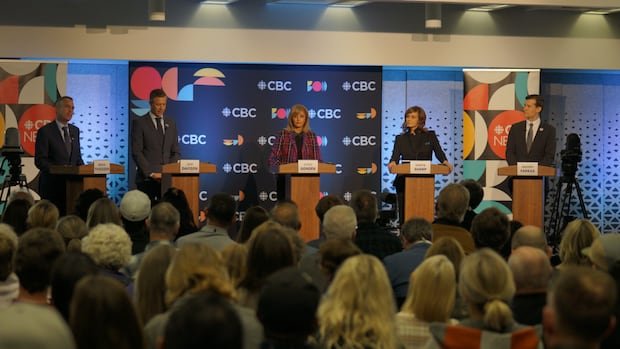

In Calgary’s mayoral race, five candidates engaged in a spirited debate touching on crime, urban development, zoning regulations, and other crucial issues. Recent polls highlight a competitive contest with Jeff Davison, Jeromy Farkas, Jyoti Gondek, Sonya Sharp, and Brian Thiessen leading the pack, although a significant portion of voters remain undecided. A total of nine contenders are vying for the mayoral seat.
As the election day approaches on Monday, the candidates are working to sway Calgarians to their side, viewing the debate as a critical opportunity to connect with a broad audience. The discussion encompassed topics such as public safety, blanket rezoning, managing the city’s rapid growth, among others.
Hosted by Loren McGinnis of The Calgary Eyeopener, CBC Calgary’s debate delved into pressing issues concerning the community. Public safety emerged as a key concern for voters, spurred by a recent decline in Calgary’s crime severity index and a notable portion of police officers on leave or accommodation.
Sonya Sharp, supported by the police union, promised to bolster law enforcement by hiring 500 additional officers, costing an estimated $75 million. However, Brian Thiessen, representing The Calgary Party, contested the feasibility of this plan, citing higher costs and recruitment challenges. Jeff Davison proposed revamping Calgary’s public safety strategy, emphasizing collaboration with federal authorities on bail reform.
Addressing the city’s burgeoning population, candidates discussed the challenges posed by rapid growth, with opinions split on the approach to managing this expansion. Jyoti Gondek criticized the provincial government’s role in fostering growth without adequate infrastructure support, highlighting the strain on city resources. Davison advocated for a tax freeze to alleviate financial burdens on residents, contrasting with Thiessen’s caution against naive fiscal decisions.
The debate also touched on the controversial blanket rezoning policy, with candidates divided on its effectiveness and impact on communities. Sharp and Davison pledged to repeal the policy, emphasizing the need for community input and respect for diverse voices. Farkas recognized the policy’s shortcomings but stressed the importance of balancing development needs with community interests.
In terms of leadership dynamics within the council and relations with the provincial government, candidates offered varying perspectives on collaboration and independence. While tensions arose over political affiliations and governance approaches, candidates emphasized the need for effective governance and consensus-building among council members.
The Calgary municipal election is scheduled for October 20, marking a crucial moment for residents to choose their next leader.