
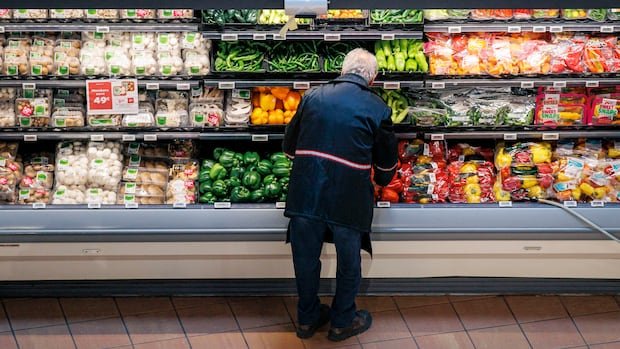

A year after the rise of the “Buy Canadian” movement across the nation, the Canadian Food Inspection Agency (CFIA) is taking action against grocery stores that falsely present imported goods as Canadian products. In 2026, the CFIA has imposed fines on two Loblaw-owned grocery outlets for such violations and is currently looking into Canadian labeling and advertising practices at Sobeys’ headquarters.
Responding to consumer demands to support local businesses and purchase Canadian goods, the CFIA emphasized its commitment to safeguarding Canadians from deceptive claims. Since the inception of the Buy Canadian movement in February 2025 in response to trade tensions under U.S. President Donald Trump, grocers have been leveraging patriotic symbols and signage to highlight domestic products.
In September, CBC News reported that in 2025, the CFIA identified 27 instances of incorrect country-of-origin claims by grocers, predominantly national chains, but had not issued any fines, prompting dissatisfaction among consumers. However, the CFIA’s enforcement approach has now shifted, with Loblaw-owned Fortinos in Toronto receiving a $10,000 fine for misrepresenting foreign-made cheese as Canadian.
The CFIA disclosed that Fortinos had displayed Président-brand Rondelé specialty cheese spread with a maple leaf symbol, creating a false impression of Canadian origin when the product is actually made in France. Federal regulations mandate that food labels and in-store signage must be accurate and not misleading.
In a similar incident, Loblaw-owned Superstore in Toronto was fined $10,000 for promoting American-made broccoli slaw as Canadian with deceptive maple leaf advertising decals. The CFIA defines a product of Canada as one created entirely or mostly within the country. These violations were uncovered last October, resulting in fines issued to the stores in January.
The CFIA reported a total of 78 violations related to incorrect country-of-origin claims on food labels or advertisements in retail stores between November 1, 2024, and February 25, 2026. The agency cited the end of the grace period for grocery retailers to ensure accurate signage, leading to the implementation of appropriate enforcement measures.
More fines may be forthcoming as the CFIA is actively investigating mislabeling practices at Sobeys, particularly a case involving a Safeway near Edmonton that advertised imported avocado oil as “made in Canada,” contrary to the actual product origin. Sobeys, along with Loblaw, emphasized their efforts to provide accurate country-of-origin signage despite operational challenges due to extensive inventory.
Former CFIA inspector Terri Lee condemned grocers for misleading consumers about product origins, emphasizing the importance of accurate labeling practices. Both Loblaw and Sobeys expressed their commitment to enhancing labeling procedures in response to the fines, with Loblaw extending apologies for any confusion caused and encouraging customers to report any discrepancies for prompt resolution. Sobeys did not address inquiries regarding the CFIA investigation into its advertising methods.