
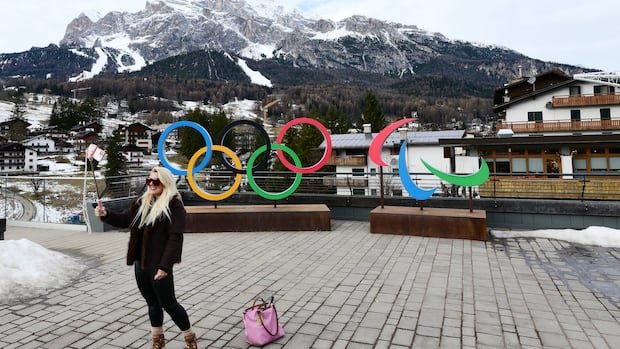

Chris Jones provides insights from Italy ahead of the upcoming Milano Cortina Olympics. As one approaches Cortina, a relic of the 1956 Winter Olympics, the ski jump, stands quietly, now serving as a soccer field. The nostalgia of past Olympic moments lingers in the air, evoking a sense of simpler times and joyous memories.
Back in 1956, Cortina hosted the entire Winter Games with only 32 countries participating. The backdrop of majestic mountains witnessed figure skating held outdoors for the final time. While television was gaining popularity, the Olympics remained primarily a live experience.
Fast forward to the 2026 Winter Olympics, jointly held by Cortina, Milan, and other locations in northern Italy, the event has posed significant challenges in its grandiose global TV-centric setup.
In Milan’s Piazza del Duomo, a countdown clock marks the days until the start of the Olympics, with a palpable sense of urgency among the locals. Delays in constructing the Milano Santagiulia hockey arena have been a prevalent topic of discussion.
In picturesque Cortina, where curling, sliding sports, and women’s Alpine events will take place, a last-minute flurry of activities fills the air. Concerns about snowfall on the renowned slopes persist, but the town exudes a more optimistic and festive ambiance compared to Milan. Vibrant banners celebrating the past and present Olympics adorn the streets, creating a hopeful atmosphere.
The Stadio Olimpico del Ghiacco, transformed from the 1956 hockey rink into the curling venue, undergoes extensive refurbishment. Despite ongoing construction activities and logistical challenges, the venue’s unique design of copper and wood stands out under the sunlight.
At the sliding center, built on the site of the original 1956 track, preparations are in full swing. Although spectator facilities are still under construction, test events have already been successfully conducted, offering a challenging yet intellectually stimulating course for modern sliders.
Canadian athletes have praised the track’s intricate design, describing it as enjoyable yet demanding. While speed may pose challenges for bobsledders, skiers are anticipated to excel on the iconic Tofane run, known for its fast and hazardous terrain.
Nestled amidst the breathtaking Dolomites, Cortina presents a delicate yet formidable landscape, setting the stage for a mix of risks and rewards during the upcoming Olympics. Amid uncertainties, the town radiates a sense of optimism and a belief in creating lasting memories, contrasting with the industrial vibe of Milan.
As preparations continue, a construction worker, surrounded by mountains, finds a moment of joy amidst the chaos, showcasing a spirit of resilience and hope. In Cortina, where echoes of past triumphs linger, there remains a sense of anticipation and excitement as the Olympics draw near.