
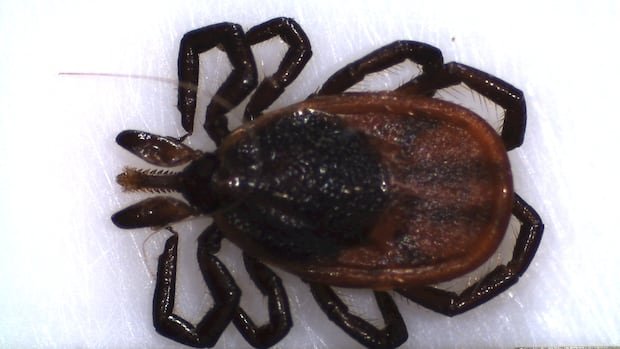

A snowy winter in Nova Scotia may not have significantly reduced the tick population as many might have hoped, according to experts. Contrary to common belief, deep snow cover can actually act as insulation for ticks, aiding their survival through the cold season. Laura Ferguson, an assistant professor at Acadia University, explained that the snow layer provides protection for ticks, allowing a sizable portion of them to endure the winter and emerge soon.
Despite some cold spells in December and January, the most effective temperatures for reducing tick populations occurred after the snow had already covered the ground. For example, there was continuous snow cover at the Halifax airport from January 18 to March 21, lasting for 64 days, the longest streak since 2020.
Ticks typically seek sheltered spots under leaf litter during the winter, where they can survive for months without feeding. Extremely low temperatures, below -10°C, can be fatal for ticks if they lack the protection of snow or leaf litter. However, ticks are resilient to cold conditions and can withstand temperatures up to -15°C in lab settings.
Jantina Toxopeus, an associate professor at St. Francis Xavier University, highlighted that ticks can adapt better to gradual temperature changes compared to sudden drops. She mentioned that extreme cold temperatures of -27°C in the past did not significantly impact the tick population in Nova Scotia.
Overall, experts like Ferguson do not anticipate a significant change in this year’s tick season compared to previous years due to the hardiness of the tick population. The long-lasting snow cover in Nova Scotia is more beneficial than detrimental to tick survival.