
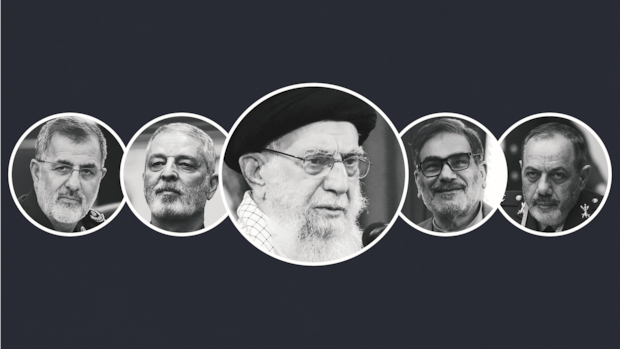

Following recent military strikes by the U.S. and Israel on Iran, the Iranian government faces a period of transition. The confirmed demise of Supreme Leader Ali Khamenei and several senior military figures raises questions about the future leadership of the country after his 36-year rule.
Iran’s political structure is intricate, with power descending from the supreme leader, who dictates national policies, appoints military heads, and supervises the president. The supreme leader is chosen by the Assembly of Experts, an assembly of 88 jurists who theoretically oversee the supreme leader’s actions.
In the aftermath of Khamenei’s death, a three-person leadership council has taken charge, comprising President Masoud Pezeshkian, Chief Justice Gholam-Hossein Mohseni-Ejei, and Ayatollah Alireza Arafi from the Guardian Council.
When questioned about the future leadership of Iran, U.S. President Donald Trump suggested that a successor from within the existing Iranian government might be the most suitable choice once the U.S.-Israeli operation concludes.
The coordinated military actions followed the recent U.S.-Iran discussions aimed at limiting Tehran’s nuclear activities. Here is an overview of Iran’s political hierarchy, highlighting the removal of key figures and those remaining to navigate the ensuing power vacuum.