
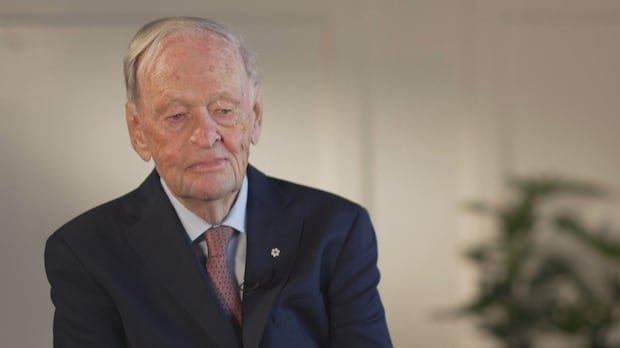

Former Canadian Prime Minister Jean Chrétien has expressed concerns about the impact of U.S. President Donald Trump on democracy, citing a disregard for the rule of law as a significant threat. In an interview with CBC’s The House, Chrétien emphasized the importance of the rule of law in Western society, stating that the absence of it could lead to constant blackmail and dysfunction.
While acknowledging that Trump’s presidency will not last forever, Chrétien remains uncertain about the lasting consequences. When asked about the responsibility of world leaders to address Trump’s behavior, Chrétien highlighted the delicate balance Canada faces in upholding its values while navigating economic interests.
Despite the challenges posed by Trump’s administration, Chrétien expressed confidence in Canada’s resilience, pointing to past experiences of overcoming adversity. He emphasized the need for adaptation in a changing world.
In a recent speech at the Liberal leadership convention, Chrétien reaffirmed Canada’s independence from the United States and criticized Trump’s actions, urging him to cease his disruptive behavior. He remarked that Trump’s actions have inadvertently unified Canadians like never before.
Regarding the ongoing trade disputes with the U.S., Chrétien noted that despite some provincial disagreements over responses to tariffs, there is a collective effort to address the challenges posed by the current trade war. He highlighted the need for federal attention to industries affected by tariffs, such as the softwood lumber sector in British Columbia.
Amid tensions between provinces over trade strategies, Chrétien commented on the historical tendency for different levels of government to blame each other for challenges. He acknowledged the complexities of intergovernmental relations and the need for cooperation in addressing trade issues.
The article also mentions a developing conflict between provinces regarding trade policies, particularly the discussion around tariffs on Canadian canola and Chinese electric vehicles. Ontario Premier Doug Ford emphasized the need to safeguard his province’s interests while recognizing the concerns of other provinces.
David Paterson, Ontario’s representative in Washington, emphasized the importance of unity among provincial leaders in advocating for Canada’s interests in trade negotiations. He highlighted the significance of Canada’s contributions to the U.S. economy in areas such as energy and automotive industries.