
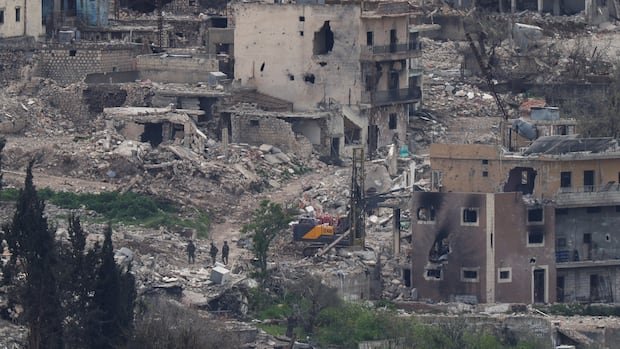

Lebanon and Israel engaged in their initial direct diplomatic discussions in Washington on Tuesday, following over a month of conflict between Israel and the Hezbollah militia. According to U.S. State Department spokesperson Tommy Pigott, the U.S. emphasized that any potential ceasefire pact between the two nations must be mediated by the U.S. Pigott highlighted that successful negotiations could lead to substantial reconstruction aid and economic recovery for Lebanon, as well as enhanced investment prospects for both countries.
Pigott mentioned that the talks will persist, with all parties agreeing to commence direct negotiations at an agreed-upon time and location. U.S. Secretary of State Marco Rubio described the talks as a significant opportunity, although he cautioned against expecting an immediate breakthrough agreement.
Rubio expressed the Trump administration’s satisfaction in facilitating the discussions, acknowledging the challenges posed by decades of historical complexities that cannot be swiftly resolved. Notably, Hezbollah, based in Lebanon, opposes the direct talks and opted out of participation, while intensifying attacks on northern Israel as the talks commenced.
Despite Hezbollah’s rejection of the discussions, the talks signify a significant milestone for two nations without formal diplomatic ties that have been in a state of conflict since Israel’s establishment in 1948. The recent escalation began when Hezbollah launched rockets into northern Israel in solidarity with Iran, its key supporter, which had been targeted by the U.S. and Israel.
At the session’s inauguration at the State Department, attended by Rubio and U.S. United Nations Ambassador Mike Waltz, U.S. Lebanon Ambassador Michel Issa, Israel’s U.S. Ambassador Yechiel Leiter, and Lebanon’s U.S. Ambassador Nada Hamadeh Moawad took the lead. The Lebanese government anticipates that the talks will pave the way for an end to the hostilities. On the contrary, Iran has stipulated ending conflicts in Lebanon and the region as prerequisites for talks with the U.S., while Lebanon insists on representing itself.
Lebanese President Joseph Aoun expressed hope that the discussions would mark the outset of alleviating the suffering of the Lebanese populace, especially in the southern regions. The Lebanese government, led by Aoun and Prime Minister Nawaf Salam, has advocated for negotiations with Israel despite opposition from Hezbollah, underscoring the escalating tensions between the Shia Muslim group and its adversaries.
Hezbollah representative Wafiq Safa stated that the group would not be bound by any agreements resulting from the talks. Safa emphasized Hezbollah’s disinterest in the negotiation outcomes, affirming their detachment from the process. Amidst ongoing hostilities in southern Lebanon, Israeli Prime Minister Benjamin Netanyahu’s objective remains Hezbollah’s disarmament and the potential for a peace agreement between Lebanon and Israel.
The situation continues to evolve in the region as diplomatic efforts persist amidst longstanding conflicts and deep-rooted animosities.