
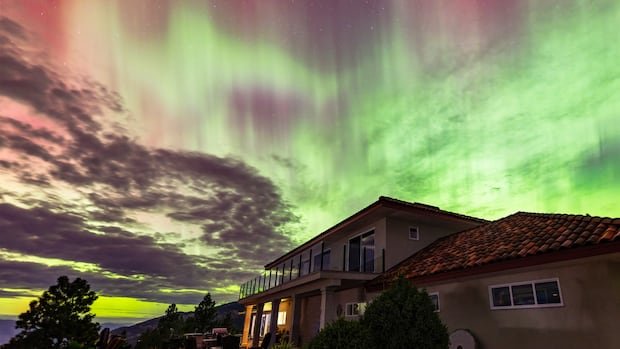

A dazzling display of northern lights may be visible in Canada on Thursday night as the sun has unleashed three coronal mass ejections (CME) directed towards Earth. These CMEs, which are fast-traveling solar particles interacting with Earth’s magnetic field, can create the mesmerizing aurora borealis in the northern hemisphere.
The recent solar storms emanated from sunspot region 4246 and are expected to lead to a moderate geomagnetic storm late on Oct. 16 GMT. While the peak time for the storm might affect viewers in the western regions, the exact timing remains uncertain. The storm could extend into Friday but is projected to be weaker.
Unlike the intense displays witnessed in 2024, this upcoming storm is forecasted to be a G2 geomagnetic event, categorized as moderate on the storm scale. To enhance the chances of witnessing the northern lights, viewers are advised to seek dark-sky locations away from urban lights with a clear northern horizon view.
Several factors need to align for the aurora borealis to be visible farther south than usual, including Earth-directed CMEs, fast solar winds, and a southward dip in the auroral hole. Interested individuals can monitor the aurora’s visibility using apps like Aurora Alerts and Aurora Forecast.
While the spectacle may not match past events, the potential for a captivating light show remains, offering enthusiasts an opportunity to witness the natural wonder of the aurora borealis firsthand.