
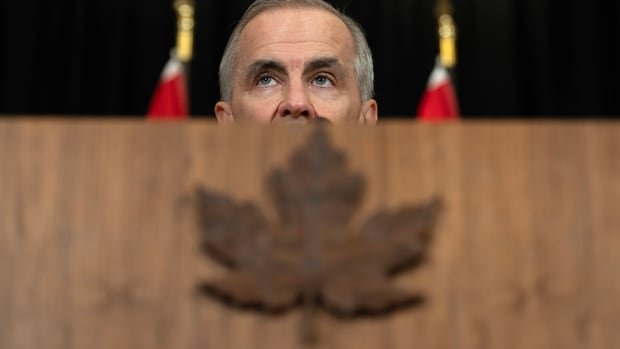

Prime Minister Mark Carney has restructured the upper echelons of the government, initiating changes and enhancements to key roles in an ongoing effort to imprint his influence on the administrative framework. Carney last reorganized his deputy ministers in December, assuring that these adjustments would yield positive outcomes for Canadians.
Glenn Purves, who departed the public sector in January 2025 to join the BlackRock Investment Institute as an economist, is returning to government service as Carney’s deputy minister of international trade. Purves previously held the position of assistant deputy minister of economic development at Finance Canada for two years from 2021 and had prior roles within the department from 2011 to 2018, including serving as the director general of fiscal policy. His extensive public service background encompasses roles such as assistant secretary at the Treasury Board of Canada Secretariat and senior adviser at the International Monetary Fund.
David Morrison, the deputy minister of foreign affairs, is transitioning to a new role as Carney’s senior diplomatic and international affairs adviser, bringing him closer to the prime minister’s inner circle. Arun Thangaraj, the deputy minister of transport, will assume Morrison’s former position at Global Affairs Canada. Morrison will represent Carney in diplomatic negotiations with other nations leading up to G7 and G20 summits, operating from the Privy Council Office, a nonpartisan body overseeing the federal public service.
Cynthia Termorshuizen, who previously held responsibilities related to G7 and G20 summits, is being reassigned to international development as deputy minister. Termorshuizen’s prior roles include serving as deputy ambassador to China from 2015 to 2018 and as associate deputy minister of foreign affairs.
In a recent update, the Privy Council Office detailed additional appointments, confirming that Morrison will also assume the role of Carney’s national security and intelligence adviser. Rob Stewart, the deputy minister of international trade, is stepping down from his current position to lead the establishment of the new Financial Crimes Agency, announced in October. This agency aims to investigate complex cases of money laundering, organized crime, financial scams, and recover illicit proceeds.
Dominic Rochon, the former chief information officer of Canada, will now serve as the Privy Council Office’s deputy secretary to the cabinet, focusing on national security and intelligence. Rochon’s new responsibilities include overseeing the country’s security and intelligence strategies to meet evolving security needs in a changing global environment, as well as managing domestic security concerns.
Additionally, Kevin Brosseau, Canada’s fentanyl czar since February 2025, retains his current role while taking on the positions of senior associate deputy minister of national defence and commissioner of the Canadian Coast Guard. The Prime Minister’s Office stated that these leadership changes are designed to enhance the effective delivery of priorities and results for Canadians, positioning the federal government to advance national interests and adapt to global dynamics.
Various other senior appointments were announced, including Michael Vandergrift becoming the deputy minister of transport, Ted Gallivan transitioning to the deputy minister of immigration, refugees, and citizenship, Harpreet S. Kochhar assuming the presidency of the Canadian Food Inspection Agency, and several other key personnel changes within government departments. Carney extended best wishes to retirees Anne Kelly, Chris Forbes, and Bob Hamilton, who had served in prominent government positions.