
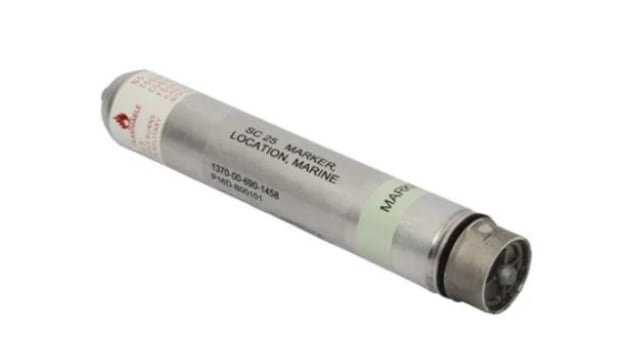

The military is advising the public to report any suspected marine location markers and ordnance found during a recent beach cleanup in Nova Scotia rather than attempting to touch or move them. Even if these metal tubes appear old or inactive, 14 Wing Greenwood’s explosive ordnance disposal team emphasized that they can still pose a significant threat.
Sgt. Ryan Doyle, the team’s deputy commander, highlighted that these markers can ignite with intense heat and function as designed, reaching temperatures exceeding 800 degrees Celsius. There have been instances where moving or disturbing these devices has led to activation or smoking, emphasizing the potential danger they present.
Marine location markers serve various purposes such as emitting smoke, light, or flame to mark positions on the water’s surface for search and rescue, navigation, and training. Despite appearing extinguished or covered in marine debris, residual phosphorus in these markers can reignite if exposed to air during transportation or movement.
If individuals encounter these markers, they are advised to maintain a safe distance, take photos, note the location, and inform local law enforcement without attempting to transport or handle the devices. Scotian Shores, a beach cleanup group in Nova Scotia, recently discovered such markers in Advocate Harbour, underscoring the importance of vigilance when encountering suspicious objects along the coast.
Angela Riley, the group’s project manager, highlighted the need for efficient reporting and disposal processes, suggesting direct communication channels with ordnance disposal teams to expedite the removal of hazardous items. Collaboration with local authorities can enhance safety protocols and ensure swift responses to such incidents.
Efforts to raise awareness about the risks associated with marine location markers are crucial in safeguarding public safety and preventing potential accidents. Vigilance, caution, and prompt reporting are essential when encountering suspicious objects to mitigate any potential dangers they may pose.