
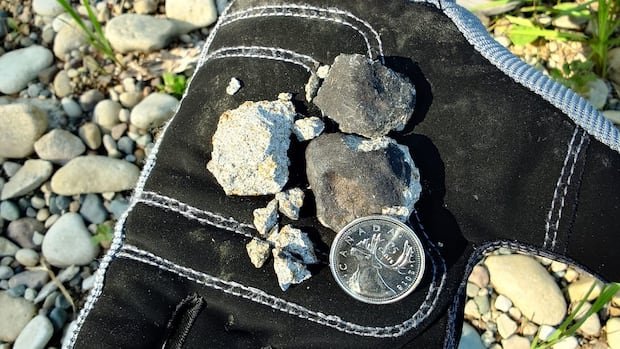

Chunks of a massive fireball witnessed in the skies of northern Ontario last month have been located on an island in Lake Huron. Dave Kenny, a resident of Vancouver Island, and his American partner, Anton Clemens, part of the volunteer group Meteorite Recovery Specialists, uncovered multiple fragments from the meteor on Cockburn Island on July 11. The mostly deserted island is situated off the western edge of Manitoulin Island in Lake Huron’s North Channel.
The team’s findings were analyzed by the Meteor Physics Group at Western University in London, Ont., confirming that the rocks were remnants of a meteor that disintegrated in the atmosphere on June 19, falling to Earth shortly after 8 p.m. Kenny, who has experience hunting for meteorites worldwide, was thrilled as this marked his first meteorite find in Canada.
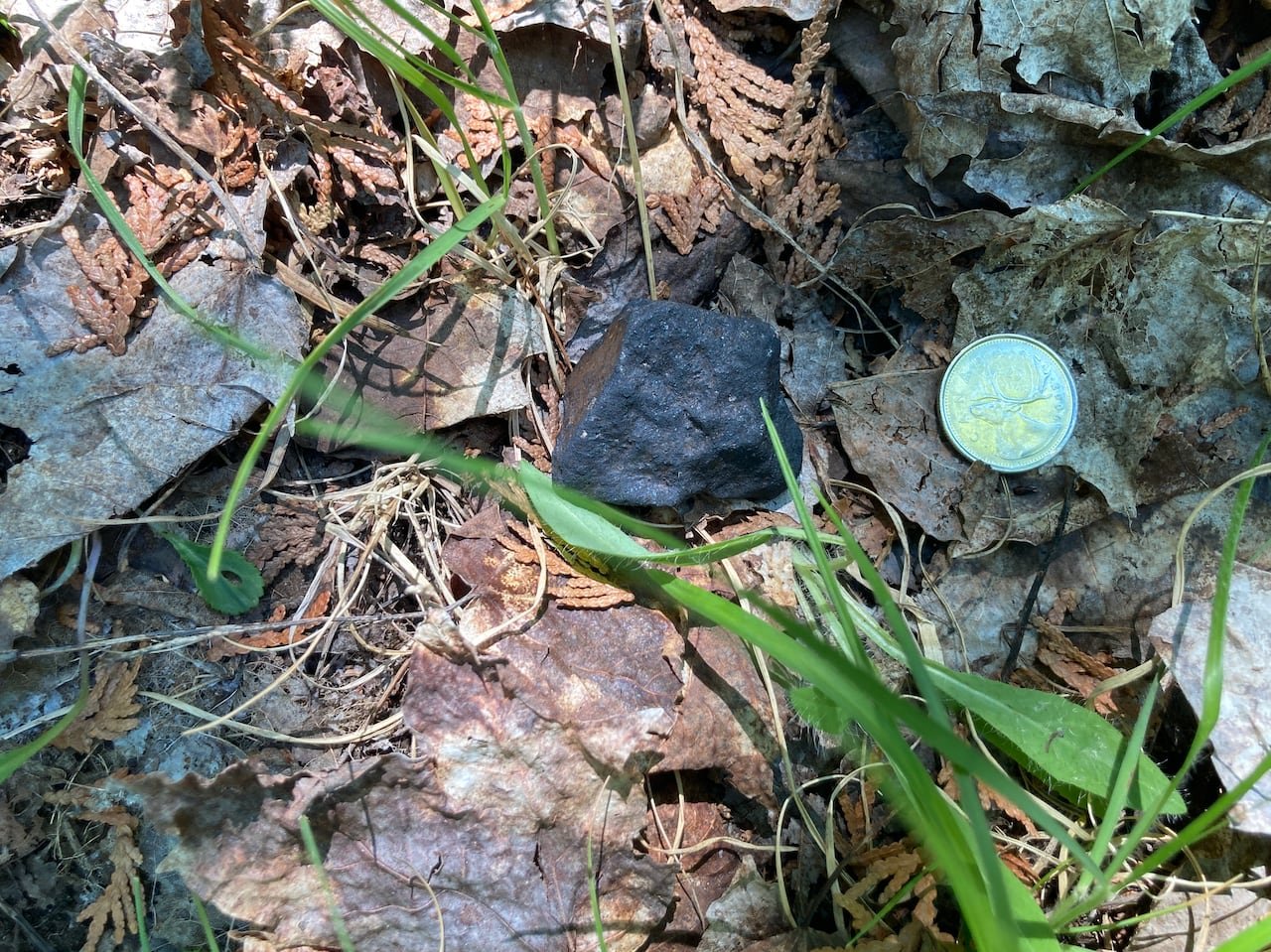
Kenny described the search on Cockburn Island as challenging due to private and protected land restrictions. He mentioned the extensive communication with Cockburn Island council and the Nature Conservancy of Canada to determine the search areas. Accessing the island was also a hurdle as it was only reachable by boat.
During their two and a half days on the island, Kenny and Clemens covered nearly 50 kilometers of walking each day, totaling 12 hours of search time daily. Despite the challenges, within two hours of docking, they found their largest fragment weighing 57.6 grams intact by the roadside.
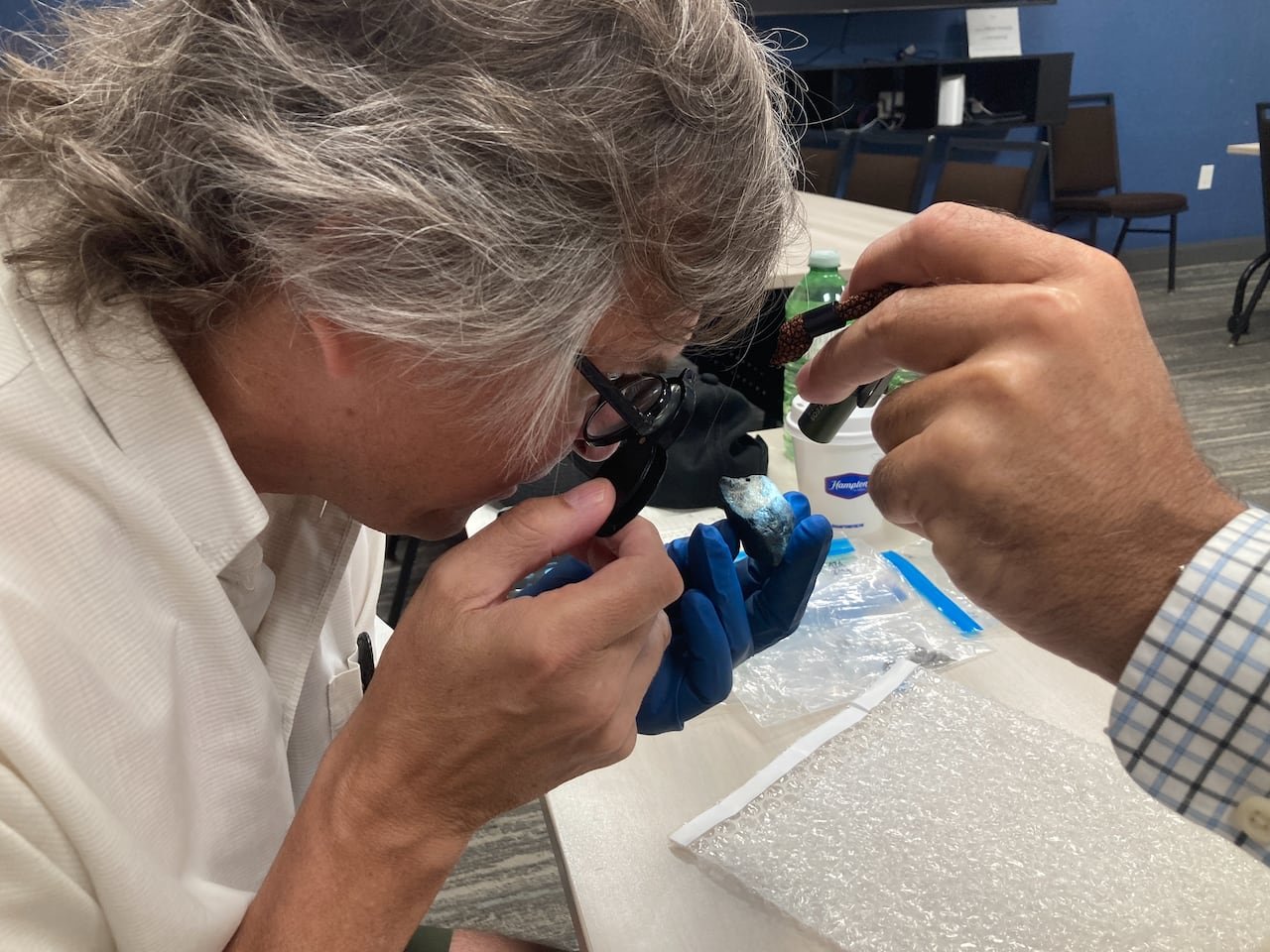
The team located more stones on township roads and public access areas, preventing potential damage by ATV tracks. Kenny mentioned that the larger piece, currently at Western University, will undergo a six-month study. These rocks, suspected to be chondrites, a common meteorite type found on Earth, likely originate from the asteroid belt between Mars and Jupiter.