
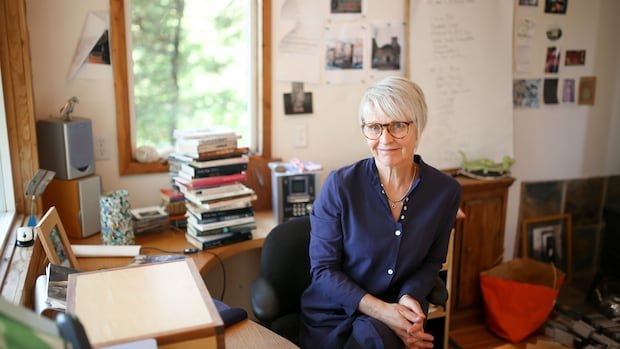

Renowned author Kathy Page has faced significant changes due to Parkinson’s disease, affecting her identity, abilities, relationships, and writing endeavors. Despite her reputation as a novelist across various genres, including science fiction, mythology, and realism, Page found herself lacking the desire to craft fictional narratives. Instead, she turned to non-fiction writing to document her journey with a neurological condition, leading to the publication of her memoir “In This Faulty Machine” by Viking.
In an interview with CBC’s Margaret Gallagher from Salt Spring Island, Page delved into how Parkinson’s has reshaped her life and creative process. The title of her memoir reflects the struggle of navigating the loss of bodily control akin to driving a malfunctioning vehicle towards an uncertain future.
Page candidly discusses the challenges of communication and understanding between individuals, especially when faced with a transformative health condition. She emphasizes the importance of clear and graceful expression to bridge the gap between experiences.
The impact of Parkinson’s on Page’s cognitive functions has shifted her focus from creating fictional worlds to conveying her personal reality with clarity and honesty. She acknowledges the profound lesson of relinquishing control over one’s body and destiny, stressing the acceptance of life’s unpredictability.
Page’s memoir aims to resonate with a diverse audience, from those confronting health issues to individuals intrigued by introspective narratives akin to the works of Oliver Sacks. By sharing her experiences, Page hopes to prompt reflection on how we perceive and navigate life’s challenges.
Through “In This Faulty Machine,” Page invites readers to contemplate the complexities of existence and the resilience required to navigate unforeseen circumstances.