
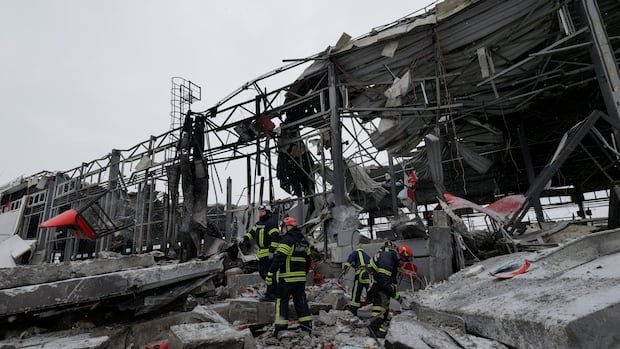

Russia has initiated a second significant onslaught of drones and missiles on Ukraine within four days, officials confirmed on Tuesday, targeting the power grid once again amidst freezing weather conditions in a seeming rejection of U.S.-led peace initiatives as the Moscow invasion of its neighboring country nears its four-year anniversary. Ukrainian President Volodymyr Zelenskyy disclosed that Russia launched nearly 300 drones, 18 ballistic missiles, and seven cruise missiles across eight regions overnight. Tragically, a strike in the northeastern Kharkiv region claimed the lives of four individuals at a mail facility, leaving several hundred thousand households without electricity in the Kyiv area. The attack in Kharkiv also resulted in injuries to 10 people, as reported by local authorities.
Following the strikes on Monday night, Kyiv Mayor Vitali Klitschko noted that the city experienced its most extensive power outage to date. With daytime temperatures plummeting to -12°C, over 500 residential buildings remained without central heating on Tuesday. To alleviate the situation, affected individuals sought refuge in residences with available power or hot water, where they could charge devices, take warm showers, or share comforting beverages.
Klitschko took action by mandating the provision of one hot meal daily to needy residents and announcing bonuses for workers in essential city services who were tirelessly restoring critical infrastructure amidst the crisis. Throughout the conflict, Russia has deliberately aimed to deprive Ukrainian civilians of warmth and running water during winter, with the aim of weakening public resistance to Moscow’s full-scale invasion, which commenced on February 24, 2022. Ukrainian officials have characterized this strategy as “weaponizing winter.”
On the other front, Russian air defenses successfully downed 11 Ukrainian drones overnight, according to Russia’s Defence Ministry on Tuesday.
The recent large-scale assault occurred shortly after reports of significant progress towards a peace agreement between Ukraine and its allies, although Moscow has displayed no indication of willingness to compromise on territorial demands or Ukrainian exclusion from European alliances. Additionally, Russia denounced the U.S. seizure of an oil tanker last week, a part of the Trump administration’s aggressive efforts to restrict oil exports from Venezuela.
The U.S. condemned Russia for a “dangerous and inexplicable escalation” in fighting as it pursued peace negotiations. Tammy Bruce, the U.S. deputy ambassador to the United Nations, highlighted the alarming casualty toll and criticized Russia’s escalating attacks on critical infrastructure.
An emergency meeting of the UN Security Council was convened at Ukraine’s request following a recent Russian bombardment involving numerous drones and missiles, including the highly potent hypersonic Oreshnik missile. Bruce reminded Russia of its prior support for a Security Council resolution calling for an end to the conflict, urging the nation to align its actions with its commitments.
In response, Russia’s UN Ambassador Vassily Nebenzia emphasized that military means would persist until Ukrainian President Zelenskyy embraced realistic negotiation terms, warning that the conditions for dialogue would only deteriorate with each passing day. The deadliest year for Ukrainian civilians since 2022 was reported by the UN Human Rights Monitoring Mission in Ukraine on Monday, citing a 31% increase in civilian casualties and over 12,000 injuries compared to the previous year.
The coalition of Ukraine’s allies is actively planning for a post-war scenario, with commitments from Britain and France to deploy troops in Ukraine upon a ceasefire agreement. Specific security assurances from the U.S. are being sought in this context, with leaders from various nations set to discuss these matters with Trump and Zelenskyy at the upcoming World Economic Forum in Switzerland.