
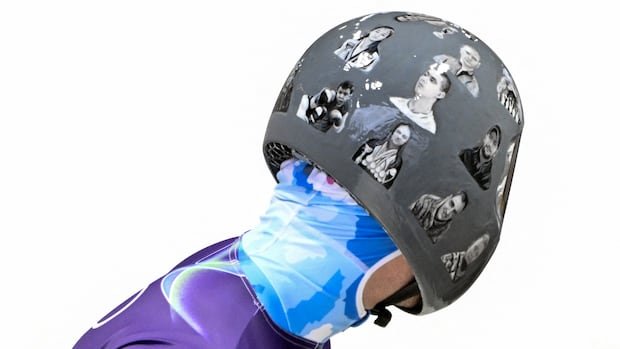

Ukrainian skeleton racer Vladyslav Heraskevych, while in Italy, confirmed his intention to defy the ban on his helmet during the upcoming race. His coach, Mykhailo Geraskevych, hinted at this decision earlier, stating, “We’ll see.”
Heraskevych has been sporting a helmet adorned with images of athletes, including children, who lost their lives in Russia’s invasion. However, the International Olympic Committee (IOC) intervened, prohibiting further use of the helmet.
In response, the IOC proposed a compromise to Heraskevych, allowing him to compete while wearing a black armband instead. The IOC deemed the helmet, decorated with pictures of around 20 deceased athletes since the 2022 Russian invasion, as a violation of Olympic regulations regarding political statements.
Despite the offer, Heraskevych expressed his refusal to wear the armband, emphasizing his determination to persist with the personalized helmet. Following his training runs on Tuesday, he asserted, “We will continue to fight for the right to compete in this helmet, as we believe we have not breached any laws or regulations.”
He plans to wear the contentious helmet again during the final training sessions on Wednesday, leading up to the heats on Thursday. The IOC emphasized to the Ukrainian Olympic Committee the importance of maintaining the Games’ independence from political and other external influences.
Heraskevych, a prominent figure in the skeleton racing scene and a potential medal contender, received support from fellow athletes amid his helmet controversy and since the commencement of the conflict.
The IOC clarified that while Heraskevych can train with the helmet without facing sanctions, he will not be permitted to compete in it. The IOC referred to Rule 50 of the Olympic Charter, prohibiting demonstrations or political, religious, or racial propaganda within Olympic venues.
The ongoing debate around Heraskevych’s helmet has drawn attention from various corners, including a message of solidarity from British world champion Matt Weston, who highlighted the tragic circumstances necessitating such discussions.
In an unprecedented move, the IOC has made an exception for Heraskevych regarding the use of armbands, albeit with limitations on content. Heraskevych questioned the IOC’s stance on his helmet compared to the presence of Russian flags at the Games.
The helmet commemorates several athletes, including Dmytro Sharpar, Pavlo Ishchenko, and Oleksiy Loginov, who tragically lost their lives. Among the victims remembered on the helmet is a 9-year-old child, symbolizing the toll of the conflict.
Ukrainian President Volodymyr Zelenskyy voiced support for Heraskevych’s cause, acknowledging the racer’s efforts to raise awareness about the ongoing struggle in Ukraine.
Having displayed his anti-war stance at previous events, including the 2022 Beijing Olympics, Heraskevych continues to advocate for peace, reflecting the enduring impact of the conflict on athletes and the global community.