
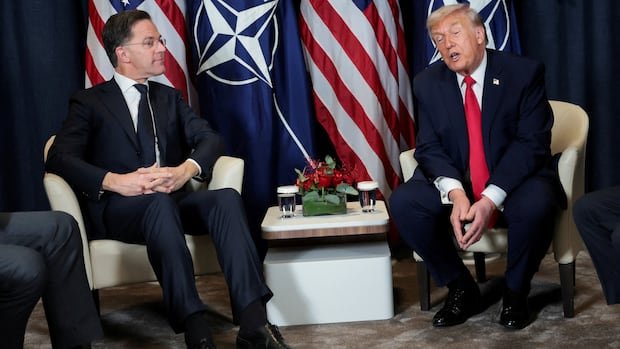

In spite of U.S. President Donald Trump’s desire and the buzz on social media, a split between the United States and NATO would be extremely challenging due to the lack of mutual interest at present. This comes in light of the recent exchange of words leading up to the scheduled meeting between Trump and NATO Secretary General Mark Rutte.
The meeting followed Trump’s mention to Reuters that he was contemplating a NATO withdrawal after allies declined to participate in the American-Israeli campaign against Iran. Speculation heightened when White House press secretary Karoline Leavitt, before the meeting, quoted Trump as criticizing NATO for being “tested and they failed.”
Leavitt mentioned that NATO countries had disregarded the American people who fund their defense, and Trump intended to have a direct conversation with Rutte. The anticipation was reminiscent of the previous week when Trump’s speech on Iran was expected to strain the Western military alliance.
Contrary to expectations, Trump’s message on his Truth Social account was less confrontational, stating that “NATO WASN’T THERE WHEN WE NEEDED THEM, AND THEY WON’T BE THERE IF WE NEED THEM AGAIN.”
Rutte subsequently highlighted the alliance’s importance to the U.S. in a speech. An official in the Trump administration hinted at potential repercussions for allies not supporting the American-Israeli initiative.
Former ambassador to NATO, Kerry Buck, pointed out the distinction between reprimanding specific countries and undermining the entire alliance. Buck acknowledged the harm caused by Trump’s rhetoric but doubted immediate actions to weaken NATO.
Buck outlined potential U.S. actions to exit or penalize NATO, including covert withdrawal, strategic troop movements, or formal notice of withdrawal. However, he emphasized the current support for NATO within the U.S. political landscape.
Recent surveys indicate ongoing American favorability towards NATO, although Republican support has slightly decreased. Buck warned of the repercussions of withdrawing from NATO, especially in light of increased Russian assertiveness.
Considering scenarios without U.S. involvement, experts highlight the financial and operational challenges for European nations within NATO. The discussion also touches on the Europeanization of NATO and the necessity of financial resources and cooperation.
Former Canadian military commander, Tom Lawson, expressed concerns over the deteriorating trust in the U.S. within NATO. Despite legal provisions for withdrawal from the alliance, the unprecedented use of Article 13 remains a contentious issue.
In summary, while the discourse around a potential U.S. departure from NATO remains prominent, the complex dynamics and consequences underscore the enduring significance of the alliance.