
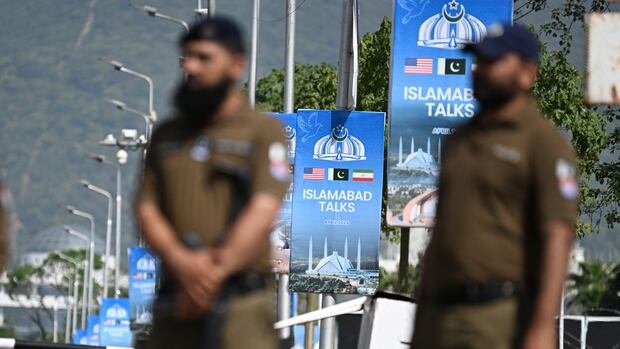

U.S. President Donald Trump has announced an extension of the ceasefire with Iran in order to allow the Iranian leadership time to present a unified proposal. The decision came following a request from Pakistan’s prime minister to delay any military attacks on Iran. Trump instructed the U.S. Military to maintain the blockade and readiness, extending the ceasefire until Iran submits their proposal and discussions are completed.
Both countries had previously indicated their willingness to resume fighting if an agreement was not reached before the expiration of the two-week truce. Iran’s chief negotiator, Mohammad Bagher Ghalibaf, criticized Trump’s extension as a tactic to stall, stating that the U.S. blockade on Iranian ports was tantamount to military aggression.
The U.S. Vice-President JD Vance, designated to lead negotiations in Pakistan, remained in Washington awaiting confirmation of Iran’s participation. Meanwhile, Iranian Foreign Minister Abbas Araghchi condemned the U.S. blockade of Iranian ports as an act of war, emphasizing Iran’s resolve to defend its interests against bullying tactics.
Amid escalating tensions, Trump had earlier warned of potential military actions if negotiations failed to progress. Iran’s negotiator hinted at unveiling new strategies, while Iran’s control over the Strait of Hormuz continued to impact global oil prices, prompting the EU to address concerns over declining jet fuel supplies.
In parallel developments, U.S. forces boarded an oil tanker smuggling Iranian crude oil, further exacerbating the conflict. The ongoing standoff has resulted in casualties on both sides, with fatalities reported in Iran, Israel, and Gulf Arab states since the outbreak of hostilities.
Diplomatic efforts are also underway between Israel and Lebanon, with talks aimed at disarming Hezbollah and fostering peace in the region. The resumption of negotiations underscores the complex geopolitical landscape in the Middle East amidst ongoing conflicts and power struggles.