
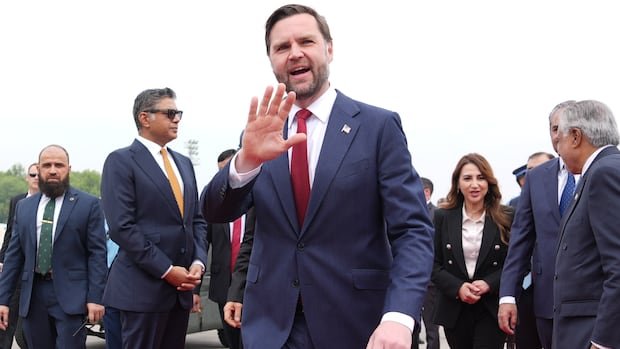

U.S. Vice-President JD Vance revealed that negotiations between the U.S. and Iran came to an early halt on Sunday due to Iran’s refusal to agree to American terms preventing the development of a nuclear weapon. The discussions, which lasted 21 hours, were closely coordinated with U.S. President Donald Trump and other administration officials.
Vance emphasized the necessity for Iran to commit to refraining from pursuing nuclear weapons and acquiring the necessary resources for their rapid development. This objective, according to Vance, is paramount for the U.S. President and has been the primary focus of the negotiation efforts.
Following a fragile two-week ceasefire announcement, the United States and Iran engaged in direct talks in Pakistan. This occurred amidst a prolonged conflict that has caused significant casualties and disrupted global markets for seven weeks. Israel, a U.S. ally, has also been engaged in military operations against Tehran-supported Hezbollah forces in Lebanon, which are distinct from the Iran-U.S. ceasefire dynamics.
The dialogue in Islamabad marked the first direct meeting between the U.S. and Iran in over ten years and represented the most significant diplomatic engagement since the 1979 Islamic Revolution. The outcome of these discussions holds significant implications for both the ongoing ceasefire and the potential reopening of the vital Strait of Hormuz, a crucial passage for approximately 20% of the world’s energy supplies, obstructed by Iran since the conflict’s inception. The conflict has resulted in a surge in global oil prices and a substantial loss of life.
Iran officially announced the conclusion of the talks and mentioned that technical experts from both sides would be exchanging documents. The statement hinted at ongoing negotiations despite existing differences, with no specified timeline for the resumption of talks.