
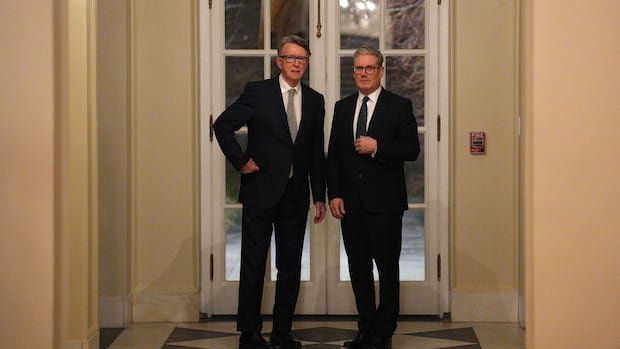

In the realm of British diplomatic assignments, the role in Washington has traditionally been crucial for maintaining the “special relationship” between the U.K. and the U.S., regardless of the sitting American president. Therefore, it came as a surprise to political observers in the U.K. when Prime Minister Keir Starmer appointed seasoned Labour politician Peter Mandelson to the Washington post in February 2025. Mandelson had a history of resigning amidst scandal during his tenure in past Labour administrations, including controversies involving an undeclared loan and suspected involvement in the Hinduja cash for passports affair.
Mandelson’s tenure as the U.K.’s ambassador lasted eight months until Starmer dismissed him due to resurfaced connections with Jeffrey Epstein, resulting in Mandelson’s subsequent resignation from the Labour Party. The move followed the U.S. Department of Justice releasing additional files related to Epstein, shedding more light on the extent of Mandelson’s association with the convicted sex offender.
While Mandelson and Epstein’s friendship was not unknown, recent revelations have exposed the depth of their ongoing communication. Starmer, facing intense questioning from the Opposition leader, admitted for the first time that he was aware of Mandelson’s longer-standing ties with Epstein before appointing him as the U.S. ambassador. Starmer accused Mandelson of repeatedly lying about the extent of their relationship, sparking scrutiny of the prime minister’s judgment.
The unfolding scandal involves potential questions about Starmer’s competence, according to Steven Fielding, a political history professor at the University of Nottingham in central England. The situation escalated with British police launching a criminal investigation into Mandelson over alleged misconduct in public office, following claims of leaking sensitive information to Epstein.
Email exchanges between Mandelson and Epstein, revealed recently, suggested that Mandelson shared market-sensitive government data and confidential emails from his time as a government official with Epstein. The emails also hinted at Mandelson influencing government policy on taxing bankers’ bonuses and sharing information on a bailout to save the euro during the Greek debt crisis.
Allegations of financial transactions between Epstein and Mandelson remain unexplained, with Mandelson denying any knowledge of receiving the alleged payments. The scandal deepened with the release of photos from the Epstein files, including one showing Mandelson in his underwear with an unidentified woman.
Further intensifying the controversy, Mandelson’s comments to Epstein upon his release from jail in 2009 were scrutinized, leading to Mandelson’s public apologies for associating with Epstein post-conviction. As pressure mounted on Starmer, he expressed regret for appointing Mandelson and faced criticism from both Opposition and government members.
The scandal surrounding Mandelson has added to the challenges faced by Starmer’s government, including economic issues, leadership concerns, policy reversals, and declining public support. This political turmoil has put the Starmer administration under significant strain, prompting concerns about its stability and effectiveness.
As Mandelson faces irreversible damage to his reputation, labeled by the tabloid press as the “prince of darkness,” political observers note the swift downfall of his once formidable influence.