
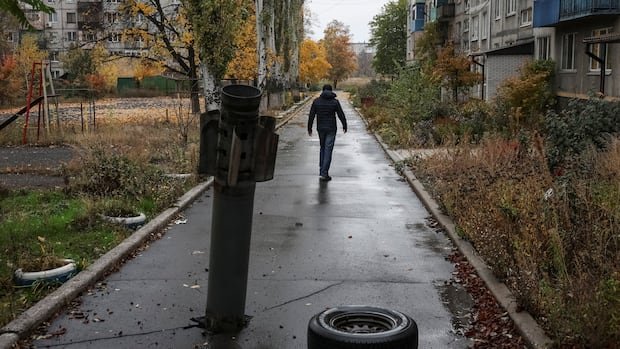

Smoke billows from various areas, buildings lay in ruins, and many apartment complexes show significant damage from Russian glide bombs in Dobropillia, a coal-mining town near the front line in Ukraine’s eastern Donbas region.
The remaining residents of Dobropillia scavenge for food and water under constant surveillance by drones, which now dominate the battlefield.
During a cloudy day in mid-October, the inclement weather offered some protection against the drones constantly flying overhead as Russia aims to conquer the few remaining cities in the region it does not yet control.
Viktoriya Sergeeva, who manages one of the last supermarkets in the city, relocated from Pokrovsk, a city approximately 30 kilometers to the south, after losing her elderly parents in a recent bombing attack.
Refugees like Sergeeva have swelled the population of Dobropillia, which has dwindled to less than 1,500 residents from 28,000 in 2022, just before the Russian invasion.

Russian soldiers, either alone or in pairs, are now seen wandering the streets after infiltrating Ukrainian lines, reflecting the new chaotic reality in a battlefield vastly different from the conventional war of two years ago.
‘Front Line No Longer Recognizable’
Dobropillia, Pokrovsk, and Myrnohrad form one of the most intense frontlines in the ongoing conflict, with Russia pushing to seize the area while Ukraine deploys significant forces, including a highly confidential infantry brigade.
At a field camp away from the front, the brigade’s soldiers and commanders discuss the evolving battlefield conditions and the challenges faced by both sides.
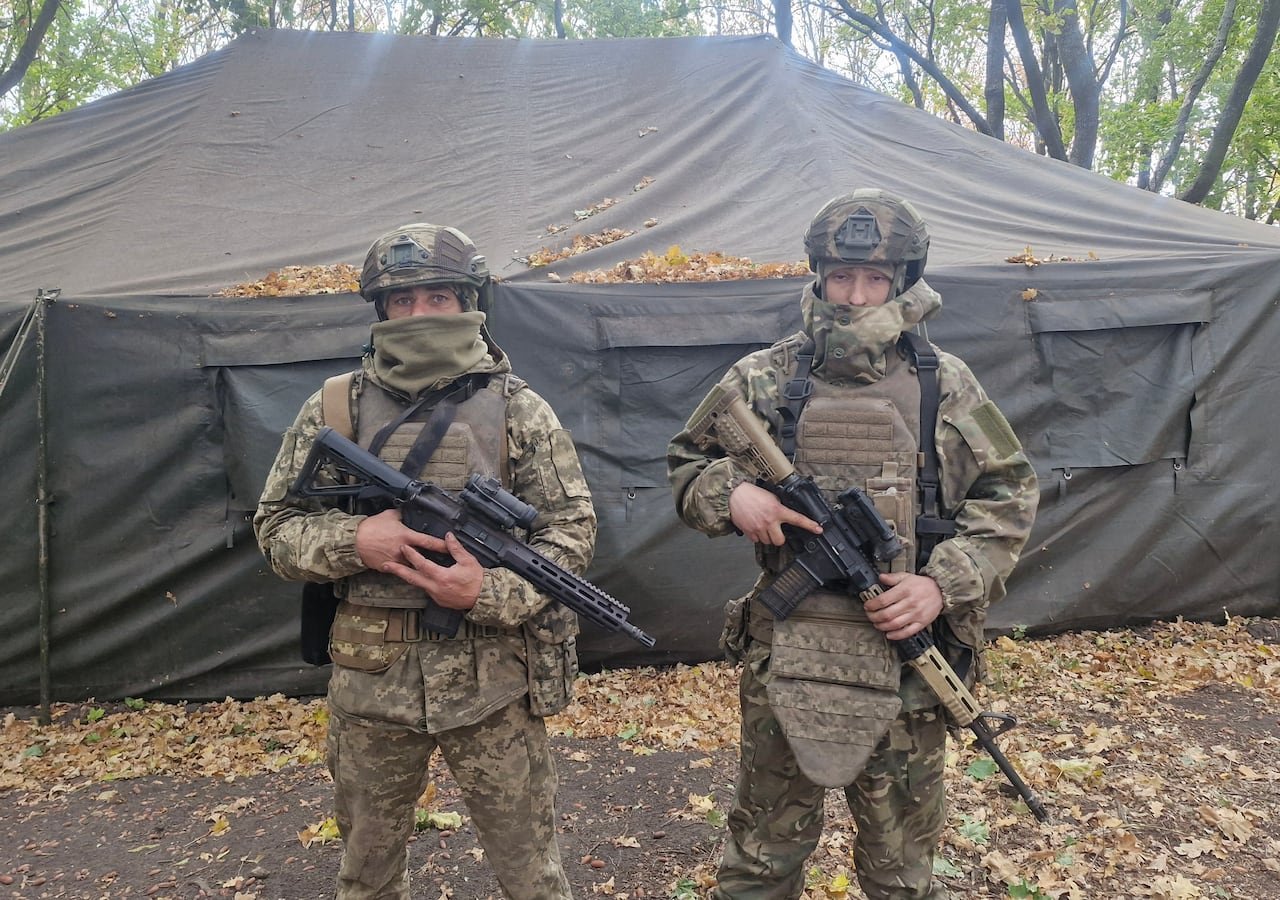
“There is no clear front line anymore,” stated Psycho, a deputy commander within the unit. “It’s more appropriate to call it a ‘front zone,’ where our forces and theirs are intermingled in small groups all over the place.”
The soldiers, using call signs or first names in adherence to Ukrainian military protocols, express the relentless Russian advances and attacks in the region.
“The Russians keep advancing,” remarked 28-year-old Achilles, a junior officer in the infantry brigade. “Their continuous offensives throughout the year aim to capture territory at any cost, with no breaks in their attacks.”
Struggles Against Drone Warfare
In the initial years of the conflict, Russia relied on armored vehicles and heavy artillery inherited from the Soviet era. However, with depleted supplies, Moscow now employs infantry supported by drones to breach Ukrainian defenses.
The widespread use of drones has forced Ukrainian units to operate in small groups to avoid detection, with larger formations being at high risk of being targeted by enemy drones.
Units face challenges reaching their defensive positions due to drones, necessitating long treks on foot, often crawling to evade detection. Resupplying these forward positions relies on drone drops of essential supplies like food, water, and cigarettes.
Efforts to counter the drone threat are ongoing, with new tactics continuously tested.