
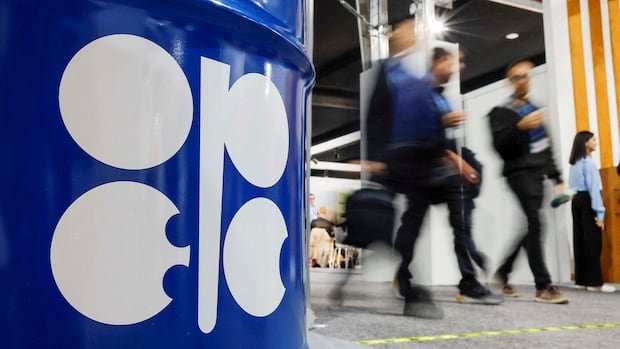

The United Arab Emirates has announced its decision to withdraw from the Organization of the Petroleum Exporting Countries (OPEC) and OPEC+ effective Friday, citing an unprecedented energy crisis stemming from the Iran conflict that has revealed divisions among Gulf nations.
Long-standing member of OPEC since its admission through Abu Dhabi in 1967 and later as an independent country in 1971, the U.A.E.’s departure weakens OPEC’s influence on global oil supplies and underscores a growing rift with Saudi Arabia, the de facto leader of OPEC.
By exiting the alliance, the U.A.E., one of the largest producers in the group, gains flexibility to boost production post-Gulf export resumption without being bound by OPEC quotas.
The announcement was conveyed through the U.A.E.’s state-run WAM news agency, emphasizing a strategic shift in energy policies to align with evolving domestic energy production goals and maintain a responsible and forward-looking role in global energy markets.
Energy Minister Suhail Mohamed al-Mazrouei highlighted that the decision was a result of a thorough review of regional energy strategies, with no prior consultations held with Saudi Arabia or other nations.
The move comes amidst strained relations between the U.A.E. and Saudi Arabia, exacerbated by political and economic disagreements in the Middle East, compounded by attacks from Iran on both countries.
The U.A.E.’s decision to leave OPEC is seen as a significant victory for U.S. President Donald Trump, who has criticized the organization for inflating oil prices and tying U.S. military support to Gulf countries with oil price levels.
Despite concerns over the impact of the U.A.E.’s exit on global markets, particularly due to threats in the Strait of Hormuz, where a significant portion of global oil passes through, the move is expected to have minimal immediate effects on oil prices.
Experts note that the U.A.E.’s departure challenges the dominance of Saudi Arabia as the central stabilizer in the oil market, given the U.A.E.’s spare production capacity to increase oil supply independently.
While the withdrawal may not cause immediate disruptions in global oil markets due to ongoing supply constraints from the Iran conflict, it could lead to market instability and oversupply once the crisis in the strait is resolved and the U.A.E. boosts its oil production.
In essence, the U.A.E.’s exit signifies a shift in the geopolitical landscape, where multilateral alliances hold less significance, paving the way for a more competitive and self-driven environment in global energy markets.