
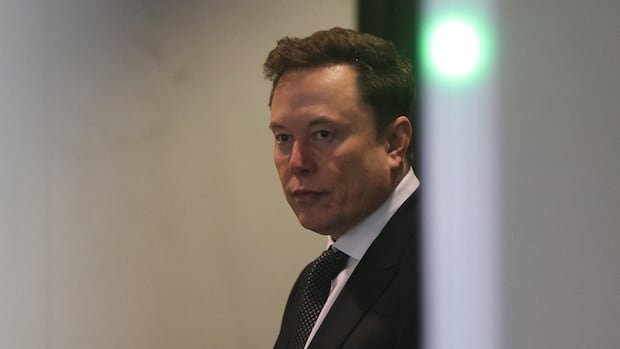

A jury in the United States ruled against Elon Musk on Monday in his legal dispute with OpenAI, determining that the artificial intelligence organization was not accountable to the billionaire for allegedly deviating from its original mission of benefiting humanity.
The federal courthouse in Oakland, California, witnessed a unanimous decision by the jury, which concluded that Musk’s lawsuit was filed too late, following less than two hours of deliberation. The trial was pivotal in shaping the future landscape of OpenAI and artificial intelligence, addressing questions of proper utilization and equitable distribution of AI advancements across various sectors like education, facial recognition, financial services, journalism, legal practice, medical diagnostics, and the mitigation of harmful deepfakes.
After the verdict, Musk expressed discontent with the outcome, labeling it as setting a “terrible precedent” and indicated intentions to appeal, emphasizing that the ruling was based on a technicality related to timing rather than the substantive merits of the case. However, the presiding U.S. District Judge Yvonne Gonzalez Rogers hinted at potential challenges ahead for Musk’s appeal, citing factual considerations regarding the statute of limitations.
Musk’s 2024 lawsuit alleged that OpenAI, along with its CEO Sam Altman and president Greg Brockman, manipulated him into providing $38 million before transitioning from a non-profit to a for-profit entity without his consent, subsequently securing substantial investments from companies like Microsoft.
The contentious legal battle underscored broader concerns about the ethical conduct and motivations of key players in the evolving AI landscape, with skepticism and fears among the public about AI’s impact on employment and society at large.
The courtroom drama unfolded over 11 days, during which Musk and Altman faced scrutiny over their credibility, with accusations flying from both sides regarding financial interests overshadowing public service motives.
Musk’s attorney, Steven Molo, highlighted witness testimonies questioning Altman’s integrity and credibility, underscoring the pivotal role of trustworthiness in the case’s outcome. OpenAI countered Musk’s claims by asserting that he was primarily driven by financial gain and had delayed raising concerns about the organization’s alleged departure from its core mission.
The legal dispute shed light on the competitive landscape in the AI industry, with OpenAI positioning itself for a potential IPO valued at $1 trillion, backed by significant investments from Microsoft. Meanwhile, Musk’s xAI venture, now integrated into SpaceX, is also gearing up for a substantial IPO that could surpass OpenAI’s valuation.
Overall, the lawsuit between Musk and OpenAI reflects the complex interplay of financial interests, ethical considerations, and the societal impact of AI technologies, shaping the course of AI development and deployment in the years to come.