
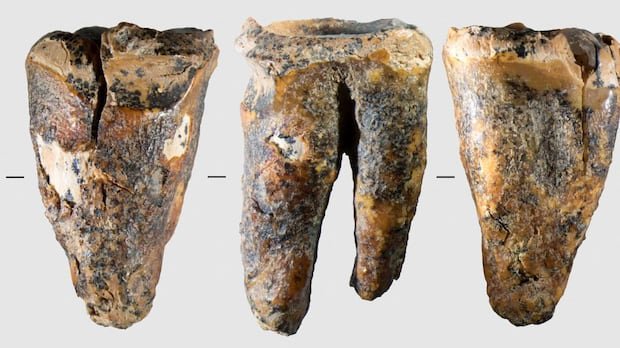

About 59,000 years ago, a Neanderthal residing in the Siberian mountains experienced a severe toothache and took action to address it. Recent findings reveal a lower molar in a cave near the Altai Mountains exhibiting signs of dental work – a sizable hole likely drilled manually with a stone tool to remove decay.
This discovery, detailed in the PLOS One journal, marks the earliest known instance of invasive dental surgery, predating homo sapiens’ recorded dental practices. The revelation adds to the mounting evidence showcasing the advanced capabilities of the extinct Neanderthals.
Anthropologist John Olsen, a study co-author, speculates on how a Neanderthal with a tooth infection sought relief. He suggests the individual either sought external help due to unbearable pain or attempted self-treatment by drilling into the tooth using a stone tool. Olsen emphasizes the social nature of Neanderthals, hinting that self-treatment seems less probable.
While the existence of Neanderthal dentists is debatable, the precision of the dental work hints at a skilled practitioner. The tooth, belonging to an unidentified adult, was found at Chagyrskaya Cave in Russia, a significant site for Neanderthal fossils. The meticulous examination of the tooth and experimental drilling on modern human teeth supported the deliberate nature of the Neanderthal dental intervention.
This groundbreaking discovery challenges the notion that complex medical procedures were exclusive to modern humans. It underscores Neanderthals’ cognitive prowess, highlighting their ability to plan, execute precise actions, and implement deliberate medical strategies.
Furthermore, the study sheds light on the misconceptions surrounding Neanderthals, emphasizing their sophisticated cognitive abilities and challenging outdated stereotypes. The tooth excavation signifies a remarkable instance of early healthcare provision, reflecting the advanced capabilities and social nature of Neanderthals.
Though Neanderthals disappeared around 40,000 years ago, their genetic legacy persists in modern humans. Recent studies have unveiled various aspects of Neanderthal life, showcasing their artistic endeavors, tool-making skills, hunting proficiency, cultural practices, and medical care provision.
The tooth study not only emphasizes the medical advancements of Neanderthals but also highlights their effective communication skills. Enduring such a painful procedure without modern pain relief necessitated clear communication of short-term discomfort for long-term benefits, showcasing the complexity and sophistication of Neanderthal communication methods.