
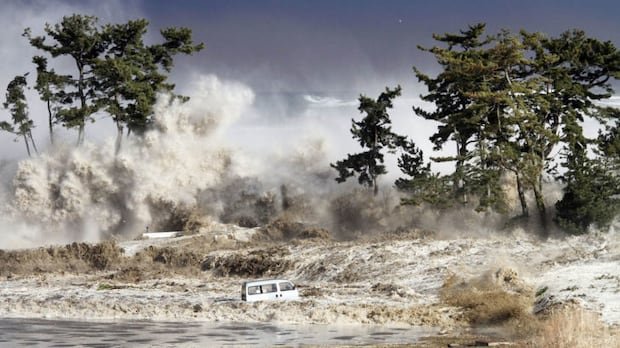

A seismic event would be the initial signal in Tofino, B.C., rather than a typical siren. Tsunami waves reaching heights comparable to a five-story building could swiftly approach the popular beaches of the town, which attract numerous tourists annually.
A recent study examining the risk of earthquakes and tsunamis along the Cascadia region focuses on Tofino, a renowned coastal community on Vancouver Island. The study poses a challenging question: How can a small town adequately prepare for a disaster that may not occur for generations but could swiftly overwhelm it?
The research indicates that a significant earthquake along the Cascadia Subduction Zone could lead to extensive tsunami flooding in Tofino, resulting in severe structural damage and endangering hundreds of lives, particularly during peak tourist seasons when the town’s population surges beyond its permanent residents.
According to Katsu Goda, the study’s author and an associate professor of earth sciences at Western University, the objective is not to instill fear but to raise awareness of the potential risks before they materialize. Tofino’s geographical location on the Pacific coast places it at the highest tsunami risk due to proximity. The concentration of campgrounds, resort hotels, and other amenities in low-lying areas escalates the town’s vulnerability.
The Cascadia Subduction Zone spans from northern Vancouver Island to Northern California and experienced a devastating full-margin rupture in 1700, triggering a tsunami that impacted coastal Indigenous communities and was recorded in Japan. While full-margin Cascadia ruptures historically occur approximately every 500 to 560 years, the irregular pattern of events underscores the need for coastal communities to prepare for rare catastrophic occurrences.
Goda’s study on Tofino models extreme scenarios of Cascadia earthquakes and tsunamis, with estimated magnitudes ranging from 8.7 to 9.1. It suggests that around half of the town’s buildings are susceptible to tsunami flooding, and structures hit by over three meters of water would likely collapse or be swept away.
Considering Tofino’s building stock valued at around $2.27 billion, significant damage resulting from a major Cascadia event could exceed $1 billion in direct property losses. The study projects potential fatalities in the hundreds, with a maximum estimate of 768, emphasizing the importance of taking precautionary measures seriously.
In the event of a local Cascadia tsunami, the challenge lies in the rapid response time required. The seismic activity itself serves as the primary warning signal, as official alerts may not be issued before the initial waves hit. Residents and visitors must recognize the signs of strong or prolonged shaking as an indication to move immediately to higher ground.
Hilary O’Reilly, Tofino’s emergency program coordinator, stresses the importance of educating individuals on early warning signs and prompt action, as waiting for official alerts may not be feasible during a Cascadia event. The district collaborates with local tourism operators to disseminate consistent safety messages to visitors, especially during peak tourist seasons.
The study also highlights the necessity of vertical evacuation options in Tofino, such as robust structures enabling individuals to seek refuge above tsunami flooding when natural high ground is inaccessible. Ongoing assessments are being conducted to explore the feasibility of implementing vertical evacuation structures to enhance preparedness efforts.
Goda emphasizes the significance of community-level risk modeling to help local authorities and residents identify areas of heightened vulnerability and severity. By providing accurate data, the scientific community aims to alert individuals to potential risks and enhance preparedness measures for future emergencies.