
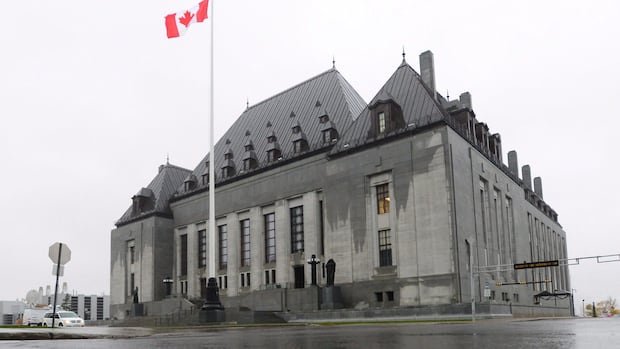

The Supreme Court of Canada has made a ruling allowing federal prisoners to contest the denial of transfers to less secure facilities based on the argument that their freedom is being restricted.
In a six-to-three decision, the high court determined that federal inmates have the right to a hearing, known as habeas corpus, to present before a judge that the conditions of their imprisonment are excessively restrictive.
The case was initiated by two federal prisoners who were refused transfers from medium- to minimum-security prisons, despite recommendations from their case-management teams. The inmates, Frank Dorsey and Ghassan Salah, attempted to challenge these rejections in the Ontario Superior Court of Justice but were unsuccessful. The Supreme Court overturned the lower court decisions, emphasizing that denying an inmate the opportunity to move to a lower security facility constitutes an unlawful deprivation of liberty.
Although the ruling did not directly impact Dorsey and Salah, who had already been transferred to minimum-security prisons by the time the case reached the Supreme Court, it is anticipated to have significant implications for other federal inmates seeking to contest security reclassifications. The decision aims to address potential systemic discrimination within the federal prison system.
Before this ruling, federal inmates had to go through a lengthy process involving a grievance and a judicial review in Federal Court to challenge security reclassification refusals. However, with the recent judgment, they can now bring a habeas corpus application to a superior court promptly for scrutiny of such decisions.
Despite some dissent, the majority of the Supreme Court maintained that the ruling will not lead to a flood of prisoner transfers, as inmates must present valid reasons to question the denial of their transfer requests. The Correctional Service of Canada will also be required to provide more detailed justifications for its decisions in such cases.
Legal experts suggest that the ruling may shed light on disparities in how Black, Indigenous, and other racialized prisoners are initially classified in maximum security institutions and the challenges they face in transitioning to lower security facilities. The decision is seen as a step towards addressing these inequalities in the prison system.
The Correctional Service of Canada emphasized its commitment to evaluating the risks of all offenders to ensure appropriate security placements, prioritizing public safety in all transfer decisions. The CSC stated that it is currently reviewing the Supreme Court decision and refrained from further comment at this time.