
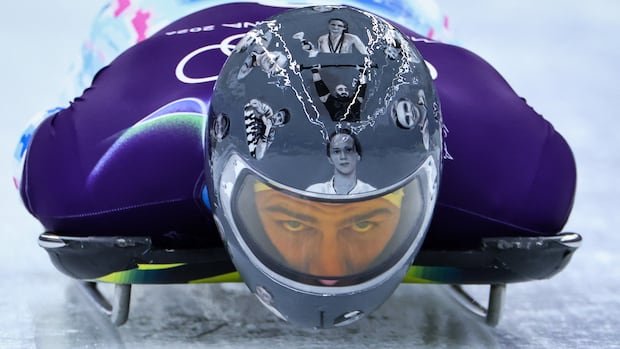

Ukrainian skeleton athlete Vladyslav Heraskevych arrived at the Milan Cortina Olympics with a customized helmet honoring Ukrainian athletes who tragically lost their lives in Russian attacks. Despite his intention to pay tribute, the International Olympic Committee (IOC) denied his request to wear the helmet during competition.
Heraskevych, a contender for a men’s skeleton medal, expressed his disappointment after the IOC’s decision not to permit the helmet adorned with images of deceased athletes who were part of the Olympic family. Ukrainian President Volodymyr Zelenskyy commended Heraskevych for highlighting the sacrifices made in their country’s struggle for freedom.
The helmet featured figures such as figure skater Dmytro Sharpar and boxer Pavlo Ishchenko, who perished in various circumstances, including on the front lines and during humanitarian efforts. Despite not personally knowing all the athletes, Heraskevych felt a strong connection to them.
Following the IOC’s assertion that the helmet violated Rule 50 of the Olympic Charter, which prohibits political demonstrations or propaganda, Heraskevych clarified that Ukraine’s sliding federation had not sought permission before his training session with the helmet. He had previously raised concerns about certain Russian athletes being allowed to compete under neutral status at the Olympic Games.
Heraskevych, who had displayed a “No War in Ukraine” sign at the 2022 Beijing Olympics, hoped to honor his fallen compatriots in Milan Cortina as a poignant reminder of the sacrifices made for Ukraine’s freedom.