
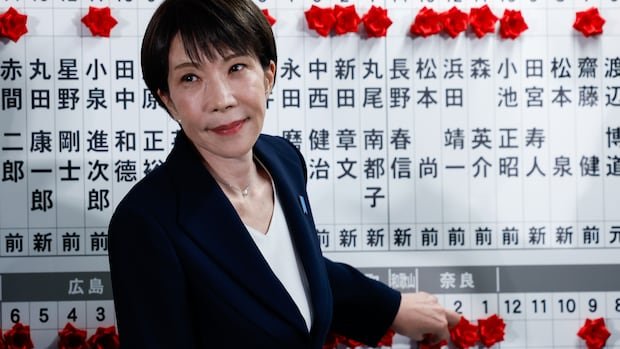

Japan’s Prime Minister Sanae Takaichi’s ruling party achieved a significant victory in a vital parliamentary election, securing a two-thirds supermajority, as per initial reports from Japanese media. Takaichi, in an interview with NHK, expressed readiness to implement policies that would enhance Japan’s strength and prosperity.
According to NHK, the Liberal Democratic Party (LDP) led by Takaichi alone clinched 316 seats by Monday morning, surpassing the 261-seat majority in the 465-member lower house. This victory set a new record since the party’s establishment in 1955, surpassing the previous high of 300 seats in 1986 under late Prime Minister Yasuhiro Nakasone. Alongside its new ally, the Japan Innovation Party, Takaichi’s coalition secured a total of 352 seats.
Despite not having a majority in the upper house, Takaichi’s increased dominance in the lower house will enable her to advance her right-wing agenda, focusing on strengthening Japan’s economy and military capabilities amid escalating tensions with China and efforts to foster relations with the United States. Takaichi emphasized the importance of garnering opposition support while driving her policy objectives forward.
The public responded positively to Takaichi’s leadership, which has resonated with younger demographics previously disinterested in politics. The opposition, fragmented despite forming new alliances, failed to pose a substantial challenge. Takaichi’s emphasis on a conservative approach appealed to voters, leading to a favorable outcome.
Looking ahead, Takaichi aims to implement a more conservative stance on security, immigration, and other key issues. Collaborating with the Japan Innovation Party, Takaichi plans to address economic challenges, including rising costs and stagnant wages. Additionally, she intends to bolster Japan’s military capabilities, revise defense policies, and enhance cooperation with the United States.
Takaichi’s victory in the recent election sets the stage for the implementation of her policy agenda without facing another election until 2028. While her rightward shift may not drastically alter Japan’s foreign policy, maintaining strong ties with neighboring countries remains a priority amid regional tensions. As Takaichi prepares to lead Japan through significant policy changes, her leadership style and policy direction are expected to shape the country’s trajectory in the coming years.