

Ceremonies commemorating the victims of the Halifax Explosion were observed throughout the city on Saturday, marking 108 years since the tragic incident. The catastrophic event took place on the morning of December 6, 1917, when the Mont-Blanc, a French munitions vessel, collided with the Imo, a steamship carrying Belgian relief supplies, in Halifax harbor. The collision led to a fire and a massive explosion that resulted in the deaths of nearly 2,000 individuals and left 9,000 others injured.
Among those who perished were members of the Mi’kmaw community of Kepe’kek, also known as Turtle Grove, now recognized as Tufts Cove on the Dartmouth side of the harbor near the MacKay Bridge. The devastating blast razed everything within a radius exceeding two kilometers, including Turtle Grove, situated just two kilometers from the epicenter. Historical accounts reveal that 29 Mi’kmaq from the community and its environs lost their lives.
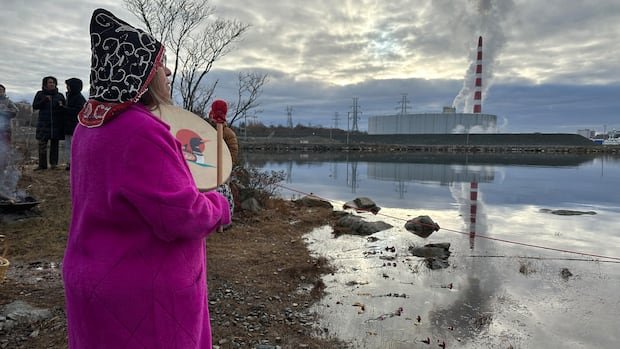
A poignant ceremony was held at Tufts Cove to honor the memory of those who died in the tragedy. At the exact moment of the Mont-Blanc explosion at 9:04 a.m. AT, Catherine Anne Martin paid tribute to her great-grandparents and their children, who were among the casualties. Martin emphasized the importance of preserving their narrative, highlighting the need to combat racism and ensure the memory of their suffering endures.
Elder Joe Michael from Sipekne’katik First Nation participated in the ceremony, offering cedar, tobacco, flowers, and berries as gestures of gratitude. He emphasized the significance of honoring all those affected by the calamity, whether Mi’kmaw, Black community members, or non-Indigenous individuals. Meanwhile, in north-end Halifax, a separate ceremony was held at Fort Needham Memorial Park overlooking the harbor where the Mont-Blanc detonated.
Marilyn Davidson Elliott, whose father was blinded in the explosion, stressed the importance of acknowledging the tragic event, especially since the first official ceremony was not held until 1985. Reflecting on the annual commemoration, Martin found solace and connection in remembering her ancestors and their stories, describing the experience as profoundly meaningful and sacred.