
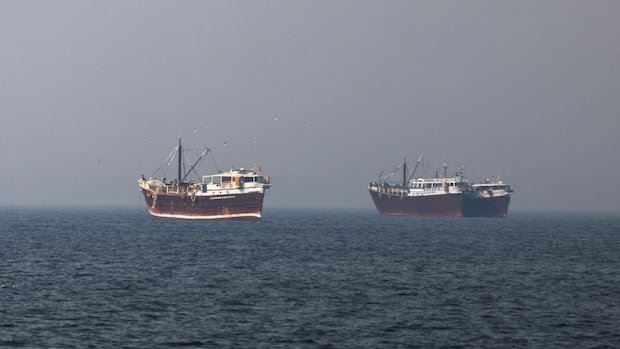

Oil prices surged on Monday due to the escalating conflict in Iran disrupting tanker traffic in the vital Strait of Hormuz, underscoring the strategic importance of this passageway for global oil supply. The narrow Strait of Hormuz, situated at the mouth of the Persian Gulf, facilitates the transit of approximately 20% of the world’s oil. Tankers from countries such as Saudi Arabia, Kuwait, Iraq, Qatar, Bahrain, the United Arab Emirates, and Iran navigate through this passage, primarily bound for Asian markets.
Any disruption in traffic flow through the Strait of Hormuz significantly impacts the oil trade, with experts emphasizing the critical nature of this trade route. While a temporary slowdown lasting a week or two could be absorbed by oil companies, a prolonged full or near-full closure exceeding a month could lead to a considerable spike in crude oil prices, potentially surpassing triple digits and pushing European natural gas prices to crisis levels witnessed in 2022.
The Strait of Hormuz, measuring around 33 kilometers at its narrowest point, serves as a key waterway connecting the Persian Gulf to the Gulf of Oman, enabling ships to access global routes. Despite Iran and Oman having territorial waters in the strait, it is internationally recognized as a waterway open to all ships. The United Arab Emirates, housing the metropolitan city of Dubai, is also adjacent to this crucial maritime passage.
Historically, the Strait of Hormuz has been pivotal for trade, facilitating the transportation of various goods from China through the region. In the contemporary era, it serves as a vital route for supertankers transporting oil and gas from major oil-producing countries to Asian markets, including China, which stands as Iran’s primary oil customer.
Recent developments have seen global shippers suspending operations in the area due to heightened tensions. Shipping giants like Maersk have announced the suspension of vessel crossings in the Strait of Hormuz, citing safety concerns. This suspension has led to a significant disruption in maritime activities, with a large number of tankers stranded in the region.
Notably, Iran’s temporary closure of parts of the strait in mid-February for military drills resulted in a notable increase in oil prices. Such actions have historically caused upheavals in global energy markets, with past instances of tension leading to disruptions in shipping activities through the strait.
In conclusion, the Strait of Hormuz remains a critical lifeline for global energy trade, with any instability in the region having far-reaching implications on oil prices and supply chains worldwide.