
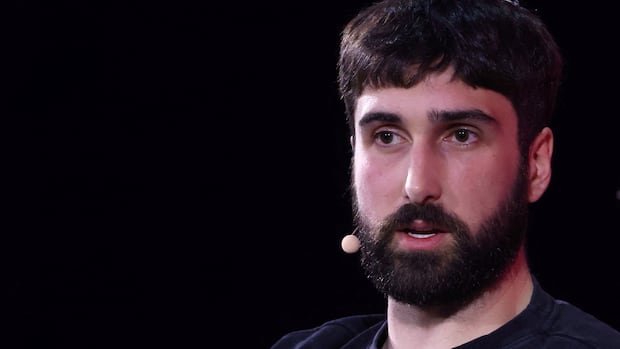

The CEO of a prominent artificial intelligence company in Canada is cautioning against succumbing to “fearmongering” following concerns raised by an Anthropic researcher who suggested a possibility of AI leading to the end of humanity within ten years. Aidan Gomez, from Cohere based in Toronto, emphasized the importance of developing AI safeguards while also highlighting the potential benefits such as reducing living costs and advancing medical breakthroughs.
Gomez dismissed the notion of a 10% extinction risk as unfounded, attributing it to individual speculation rather than factual analysis. He echoed Prime Minister Mark Carney’s call for a global oversight body to address AI’s perceived risks. Canada, alongside the United States, China, and France, holds a significant position in the global AI landscape due to its early research contributions.
Cohere, specializing in generative AI models, has collaborations with the federal government and Bell Canada. At a recent investment summit in Toronto, where Carney sought substantial investments for Canada, several companies announced expansion plans, including Bell Canada’s AI data center near Regina.
Despite some industry leaders advocating for a slowdown in cutting-edge AI development to establish safety protocols, Gomez opposes such industry-driven oversight. He favors a global approach to ensure AI safety and accessibility without domination by any single country. Evan Solomon, the federal minister for AI and digital innovation, emphasized the government’s commitment to AI safety and announced an upcoming major AI safety announcement with Canadian AI pioneer Yoshua Bengio and Germany.
The establishment of international safeguards for AI, amid the competitive landscape between the U.S. and China, is deemed challenging yet feasible. The competitive analogy to the space race underscores the urgency for regulatory frameworks to manage AI advancements while safeguarding national interests. Canada is urged to protect data sovereignty and strategic capacity when attracting foreign investments in AI infrastructure to avoid compromising essential national assets.