
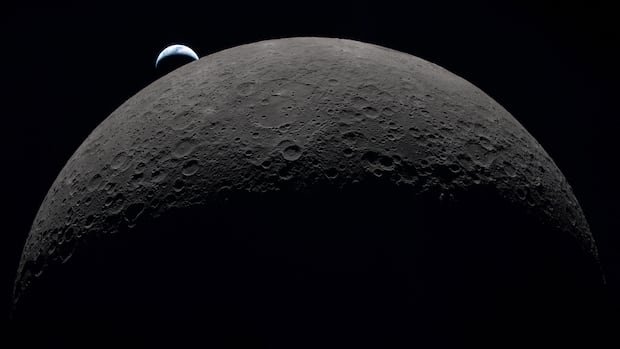

The Artemis II astronauts have created a lasting connection with the Apollo 8 mission. Following their historic lunar flyaround, NASA unveiled remarkable photographs taken by the U.S.-Canadian crew the next day. The four astronauts paid homage to Apollo 8’s iconic “Earthrise” image from 1968 by capturing their own version called “Earthset,” showing the Earth setting behind the moon’s gray, cratered surface.
During the Apollo 8 mission on December 24, 1968, astronaut William Anders took the original “Earthrise” photograph, which is recognized as the first color image of Earth from space. This photo is credited with catalyzing the global environmental movement and contributing to the establishment of Earth Day in 1970, an annual event that promotes environmental awareness and activism.
Additionally, another image taken by the Artemis II crew captured a total solar eclipse caused by the moon blocking the sun from their vantage point in space. The three American astronauts and one Canadian astronaut are now on their way back home, scheduled for a splashdown in the Pacific on Friday.
In a significant parallel to history, the three Apollo 8 astronauts were the first humans to orbit the moon on Christmas Eve in 1968, capturing the iconic “Earthrise” image that later became synonymous with the environmental movement of the era.
Artemis II represents NASA’s inaugural manned return to the moon, a pivotal milestone towards a lunar landing by a different crew in the next two years. This mission sets the stage for future lunar exploration endeavors, including establishing a moon base and ultimately venturing to Mars, highlighting the necessity of international collaboration in undertaking such ambitious missions.