
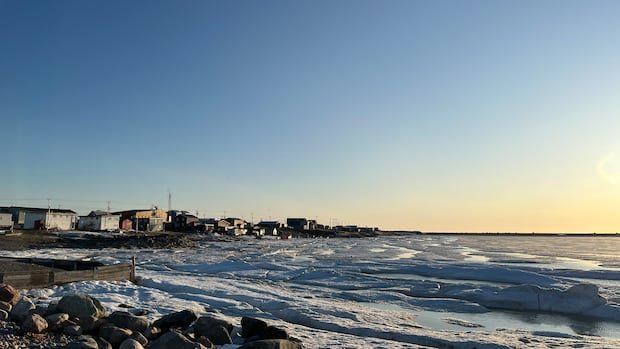

Arviat, a small community in Nunavut situated on the western coast of Hudson Bay, has been designated as the site for Canada’s first Inuit-led university in the Arctic region. The official announcement of the main campus location took place in Ottawa, hosted by Inuit Tapiriit Kanatami (ITK), the national organization representing Inuit.
Natan Obed, the President of ITK, emphasized that establishing the inaugural university in Inuit Nunangat, the Inuit homeland in Canada, is a significant move towards asserting authority in the Canadian Arctic. Obed highlighted that Inuit play a crucial role in Canada’s sovereignty, with education and knowledge serving as key pillars of their society.
Initially planned to be revealed with Mary Simon, the first Indigenous Governor General of Canada and a strong advocate for the university, the event was canceled by Rideau Hall following the tragic mass shooting in Tumbler Ridge, B.C. Arviat, with a population of approximately 3,000, was selected by ITK’s board of directors after evaluating 51 communities, shortlisting eight, and receiving detailed proposals from six.
The other five communities are now being considered for hosting regional knowledge centers or satellite campuses, including Inuvik (Northwest Territories), Iqaluit and Cambridge Bay (Nunavut), and Kuujjuaq and Puvirnituq (Quebec). Arviat excelled in readiness, site capacity, and alignment with the university’s vision for a culturally immersive learning environment, as per ITK’s assessment.
The majority of Arviat residents speak Inuktitut, the language that will be taught at the university, and continue to uphold their traditions, which the community eagerly anticipates sharing. Engaging the public through radio call-in shows and social media consultations, Arviat received overwhelming support for the university application.
Expected to be operational by 2030, the new university aims to accommodate around 100 students and employ 80 staff members. While housing availability in Arviat is limited, plans are in place to construct accommodations to meet the university’s needs, potentially bringing economic benefits and new enterprises to the community.
Emphasizing the significance of providing higher education locally, Obed expressed a desire for young Inuit individuals, particularly those residing in Nunavut with a substantial youth demographic, to have access to educational opportunities nearby. The university project is estimated to cost up to $200 million, with substantial contributions from private donors, including a $50 million pledge from the Mastercard Foundation.
Awaiting a financial commitment from the federal government, Obed stressed the importance of their support for the project. Although the 2025 federal budget included a promise to back the Inuit Nunangat University, the specific funding amount remains undisclosed. A federal government source indicated a potential contribution of up to $50 million pending the completion of the university’s funding proposal.