
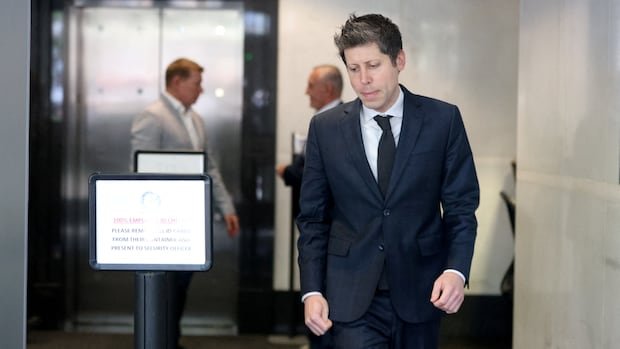

In a high-stakes legal battle, two billionaires are facing off, with Elon Musk, the wealthiest individual globally, accusing OpenAI CEO Sam Altman of misappropriating a charitable organization. Musk is demanding Altman’s removal from the company’s leadership, alleging that OpenAI breached its founding agreement by transitioning into a for-profit entity. The case, seeking $150 billion in damages, concluded last week in Oakland, Calif., with U.S. District Judge Yvonne Gonzalez Rogers overseeing the proceedings.
Ebrahim Bagheri, a University of Toronto professor specializing in responsible AI development, emphasized the significant impact the court’s ruling would have on the AI market. He highlighted the unforeseen growth and profitability of generative AI technology since OpenAI’s inception, stating that any restructuring within OpenAI could influence not only the organization’s services but also those of numerous other companies, including tech giants like Microsoft.
The trial witnessed a parade of Silicon Valley tycoons testifying, while protesters outside the courthouse criticized both parties. Amid the legal showdown, Catherine Bracy, CEO of TechEquity, a group addressing tech industry inequality, mentioned a prevailing sentiment that no one is rooting for either side, characterizing it as a lose-lose situation.
Founded as a non-profit in 2015 by Musk, Altman, and others, OpenAI has transformed into a for-profit enterprise set to go public with a valuation of $1 trillion. Musk is pushing for OpenAI’s reversion to a non-profit status and seeks to oust its president, Greg Brockman, who holds a $30-billion stake in the company. Musk alleged that OpenAI coerced him into providing $38 million and received substantial investments from Microsoft and other firms, prompting his demand for damages.
The trial exposed a rift between Musk and Altman, with Musk emphasizing the existential significance of the case, referring to it as a matter of civilization’s fate. Musk’s remarks led to speculation about his motives, given his for-profit AI company, xAI, eyeing an IPO under SpaceX, potentially creating a conflict of interest.
Altman’s leadership was scrutinized, particularly following a critical profile in The New Yorker. During cross-examination, Altman defended his integrity, although Musk’s attorney seized on his response to question his trustworthiness. Altman attributed the tensions with Musk to jealousy and highlighted concerns regarding centralized control over AGI within OpenAI.
As the jury prepared for deliberations, Altman was present during closing arguments, while Musk was notably absent, accompanying President Donald Trump on a trip to China against the court’s advice. The legal teams continued to clash, with Musk’s side accusing Altman of dishonesty, while OpenAI’s lawyers denounced Musk’s tactics as misleading and irrelevant.
The trial’s conclusion is anticipated early this week, with observers like Bracy viewing it as a reflection of modern-day dynamics where the actions of powerful billionaires are under scrutiny. The case underscores the accountability of individuals in positions of power and how legal battles can unfold between prominent figures, shaping the landscape of the tech industry.