
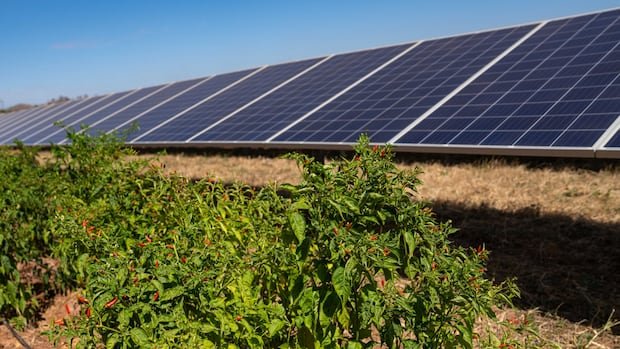

JCM Power, a Canadian company, utilized bird’s eye chili peppers to construct the initial solar power facilities in Malawi. These solar plants, including the 60-megawatt Salima plant and the Golomoti plant with a five-megawatt battery, now contribute about a tenth of Malawi’s grid power. The Salima plant, established in 2021, was the country’s first solar plant, followed by Golomoti a year later, featuring the first utility-scale project storage system in sub-Saharan Africa.
Malawi has historically had limited access to electricity, with less than 16% of its population having access as recently as 2023. The delay in solar implementation was attributed to Malawi’s lack of regulations for solar projects. JCM Power, facing challenges such as operating in volatile currencies like the Malawian kwacha, addressed this by investing in community farming of bird’s eye chili peppers near the solar panels, which are then sold in U.S. dollars, primarily to Nando’s Peri-Peri restaurants.
Africa boasts abundant solar resources, with the International Energy Agency noting that the continent holds 60% of the world’s best solar potential due to its proximity to the equator and minimal dust and cloud cover. The push to provide electricity to the 600 million Africans without access by 2030 aligns with the UN’s universal access goal. Solar energy installations in Africa increased by 54% in 2025, with rooftop systems funded by individuals and utility-scale plants connecting to national grids viewed as cost-effective solutions.
Stardust Solar Energy, a Vancouver-based company, launched its first franchise in Zambia, contributing to the private investment trend in African solar projects. The company is setting up a 30-megawatt solar project in Zambia through its franchise, Megatricity Energy. This initiative aims to accelerate power deployment in Africa, especially through solar energy, known for its rapid deployment capabilities.
It is crucial to approach solar projects sustainably to maximize benefits and mitigate negative impacts. Development banks emphasize responsible development, including promoting local agriculture, providing training and employment opportunities, and ensuring gender equality. Local communities must be involved in the process to address potential challenges like land use conflicts, resource depletion, and inadequate employment generation associated with solar projects.
Investing in solar projects in Africa, whether through public financing or private initiatives like franchising, can not only provide energy solutions but also foster local economic development and community empowerment. Sustainable solar development requires careful planning and community engagement to ensure long-term positive outcomes while minimizing adverse effects on the environment and society.