

A former mining region in northern Ontario is set to become the site of North America’s primary battery-grade cobalt refinery. The town of Cobalt, situated nearby, appears to be aligning with its namesake. The forthcoming facility will handle cobalt rock extraction, transforming it into cobalt sulfate, a crucial component in lithium-ion batteries utilized in various applications such as electric vehicles, smartphones, and military aircraft.
Electra Battery Materials, the entity spearheading the initiative, anticipates the plant to be fully functional by the conclusion of 2027, capable of generating 6,500 metric tons of battery-grade cobalt annually, sufficient to cater to roughly one million electric vehicle batteries each year. Trent Mell, the company’s founder and CEO, emphasized the growing necessity for these essential minerals to support modern society’s battery and high-tech requirements, underscoring implications for not just automotive and grid power but also national security.
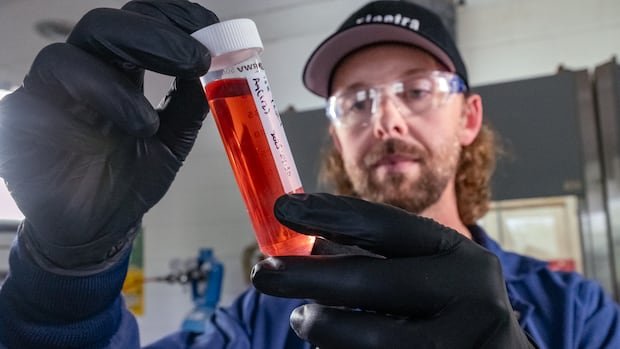
Within the refinery’s laboratory, Graham Kinsman, Electra’s metallurgical lead, is actively optimizing chemical and physical processes to eliminate impurities like iron and copper from the cobalt. This meticulous approach ensures the production of a highly pure cobalt form that enhances battery stability, preventing overheating and prolonging charge retention.
Despite the historical context of abundant cobalt in the Cobalt area, the refinery will not locally source mined rock but rather import it from overseas. The town derived its name from the discovery of cobalt during the construction of the Temiskaming and Northern Ontario Railway in 1903, although the primary focus at that time was on silver findings.
In recent years, mining entities have explored cobalt prospects within the former silver mines, searching for the distinctive pink “cobalt bloom” indicating cobalt exposure to oxygen. However, no sustainable vein has been identified to date. Electra’s transformation from First Cobalt Corp. to its current iteration reflects a shift towards repurposing a former metals refinery in the region.
The cobalt supply originates from the Democratic Republic of Congo (DRC), where the majority of global cobalt is extracted. Following retrieval, it is transported to Cobalt after passing through South Africa’s Port of Durban, Montreal’s Port, and trucking over 700 km. Despite ongoing concerns regarding mining practices in the DRC, Mell affirmed proactive measures to address these issues, with regular audits conducted by the company and third-party experts.
The project’s strategic significance lies in diversifying the cobalt supply chain beyond China, which currently dominates battery-grade cobalt refining globally. Mell emphasized the importance of replicating China’s business model to secure essential minerals for Western industries. Electra aims to contribute approximately four percent of the world’s cobalt sulfate output by the end of the next year, having secured a significant supply agreement with South Korean company LG Energy Solution.
Government support, including grants and loans totaling $37.5 million Cdn from federal and provincial sources, along with additional funding from the U.S. Department of War, underscores the project’s broader impact on critical mineral supply security. Mell underscored the geopolitical context driving the project, highlighting the imperative to secure the supply chain within North America amid global uncertainties.