
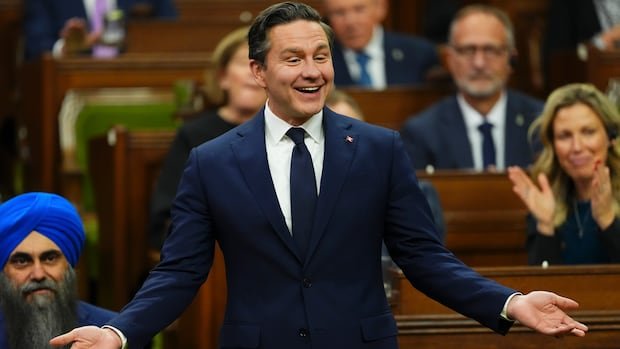

In a bid to challenge the Liberal government, the Conservatives presented a motion in the House of Commons regarding the memorandum of understanding between the federal and Alberta governments. The motion aimed to garner support for pipeline construction, putting the Liberals in a tough spot with two unfavorable choices.
If the Liberals supported the motion, it could have exposed dissent among their backbenchers, notably Steven Guilbeault’s potential conflict with the Conservative stance. On the other hand, rejecting the motion could be seen as the Liberals not genuinely supporting pipeline development, as indicated by the Conservatives.
The Liberals dismissed the motion as a political maneuver and chose to vote against it, prompting disappointment from the Conservatives. Anticipating the outcome, the Conservatives had already prepared a radio ad targeting Corey Hogan, the Calgary Confederation MP, for his perceived “betrayal.”
The outcome of the vote may impact future elections, especially in Calgary Confederation, which was won by a narrow margin. However, the actual progress or benefits resulting from this political maneuver remain uncertain.
Key questions persist for the Liberals regarding their stance on the MOU, particularly concerning climate policy and potential impasses in pipeline negotiations. The Conservatives continue to doubt the Liberal government’s commitment to pipeline expansion, reminiscent of past skepticism towards the Trans Mountain project.
The Conservatives strategically focused on the pipeline aspect in their motion, but critics argue that it overlooked crucial elements of the MOU. Attempts to amend the motion by adding references to Indigenous ownership and other aspects were made, yet certain critical points were still omitted.
The debate extends beyond individual motions and riding-specific concerns, delving into broader economic and national unity issues amid evolving global challenges. Ultimately, the motion’s impact on addressing these fundamental issues remains limited, leaving the broader objectives largely unaddressed.