
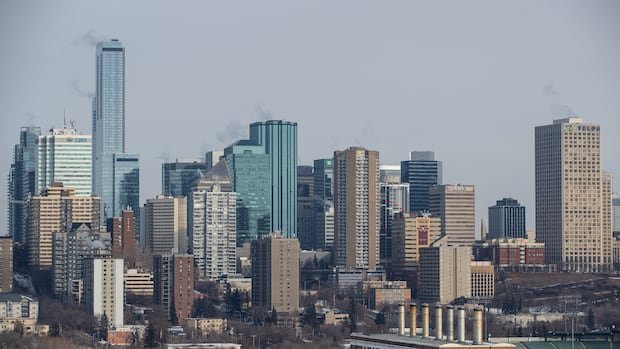

Municipal governments are increasingly facing the challenges of addressing and preparing for climate change. These topics emerged prominently among Edmonton residents when questioned by CBC in anticipation of the upcoming municipal election.
To understand these concepts in a evolving world and explore how municipalities can tackle these challenges, CBC interviewed Neal LaMontagne, a lecturer specializing in Earth and atmospheric sciences at the University of Alberta, and Sandeep Agrawal, a professor and the director of the Alberta Land Institute, also specializing in Earth and atmospheric sciences.
Climate mitigation and adaptation, often used interchangeably, have distinct meanings. Mitigation involves reducing our impact by lowering energy intensity through changes in transportation and infrastructure. On the other hand, adaptation involves responding to a changing climate to manage shocks and stresses effectively.
City councils must consider issues like transportation and infrastructure development to combat climate change effectively. Initiatives such as promoting shorter commutes, active mobility, and efficient goods distribution can significantly reduce emissions. Additionally, optimizing heating and cooling systems in buildings is crucial for emission reduction.
Agrawal suggested introducing more green roofs and eco-friendly materials in industrial buildings to enhance sustainability. Cities must prioritize climate change due to its immediate impacts on temperature, precipitation, and air quality, affecting both infrastructure and residents.
Edmonton’s climate policy is robust, but continual improvements are essential. Enhancements such as solar-ready buildings and EV-friendly parking areas can have a substantial impact. However, there are limitations to what cities can enforce, as certain aspects like building codes fall under provincial jurisdiction.
Despite constraints, experts believe that cities should lead by example in sustainable development to inspire positive change. Municipalities play a vital role in addressing climate change, demonstrating a forward-thinking approach for a greener future.